
The professional LED screen lifespan realistically falls between 50,000 and 100,000 hours — a range driven primarily by how well the chassis manages heat. This number directly dictates the return on investment for your display project. In practice, equipment longevity comes down to precise technical choices, distinct from commercial spec sheets. I recommend sizing your components based on the actual intended usage.
Professional LED panel lifespan: everything you need to know
LED diodes maintain their luminosity over extremely long cycles, often advertised at 100,000 hours of operation. In practice, this theoretical figure masks a more complex operational reality. The real differentiator lies in the durability of receiver boards and the stability of power supplies under voltage fluctuations.
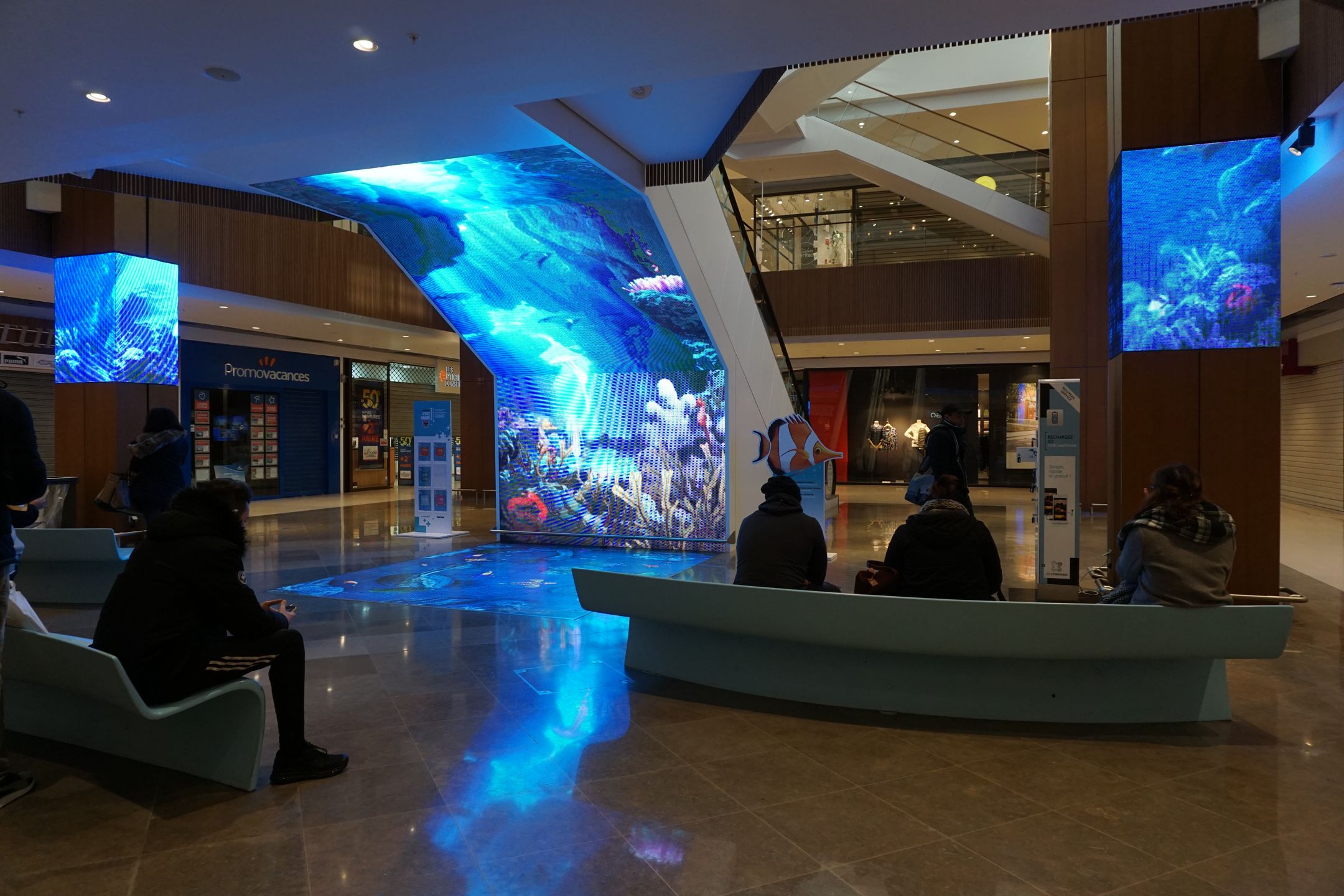
How Many Hours and Years Does an LED Screen Last?
The LED screen lifespan in years depends mathematically on your daily usage schedule. An LED lifespan estimated at 100,000 hours equates to eleven years of continuous operation. Indoors, at a regulated temperature, the LED screen lifespan significantly exceeds that of LCD equipment. The final choice therefore hinges on the installation environment.
- Continuous commercial use (24/7): between 6 and 11 years on average, conditioned by the quality of thermal dissipation.
- Moderate use (16h/day): up to 17 years for an LED panel operated indoors with strict ventilation.
- Exposed outdoor use: without IP65 protection and active cooling, the equipment degrades in less than three years.
At the 50,000-hour mark, LED technology shows a natural decline in optical performance. Your giant LED screen does not suffer a sudden failure but gradually loses color fidelity. This is where the LED screen lifespan takes on its full meaning. Anticipate a power margin from the initial sizing.
| Usage pattern | Total hours | Estimated average lifespan |
| 24/7 continuous | 100,000 h | ~ 11 years |
| 16h/day, 7 days | 100,000 h | ~ 17 years |
| Intensive commercial use | 50,000–100,000 h | 6 to 10 years |
| Indoor, controlled conditions | Variable | Often 10+ years |
| Exposed outdoor, no IP65 | Variable | 2 to 4 years |
Factors That Reduce an LED Panel’s Lifespan
The lifespan of a flat LED screen isn’t limited to pixel resistance alone. A display losing half its brightness within two years quickly becomes unusable. We frequently observe LED panels declining prematurely due to inadequate electrical settings at commissioning. The LED screen lifespan depends foremost on weatherproofing quality and cabling integrity.
- Excessive temperature: the rear of the screen must stay below 45 °C to protect the circuits.
- Brightness pushed to maximum: exceeding 350 milliamperes generates damaging heat for the onboard electronics.
- Unstable power supply: mains voltage fluctuations over-stress the components and receiver boards.
- Direct sun exposure: UV impact demands a high resistance standard for outdoor equipment.
Heat is, concretely, the primary degradation factor, immediately followed by overvoltage. In practice, pushing intensity parameters mechanically increases the internal heating of your installation. This is where the choice becomes critical for highly exposed shop windows. Never validate a configuration running at 100% of its nominal capacity.
Direct sunlight accelerates the degradation of plastics and solder joints. This parameter requires video walls designed for extreme environments, equipped with integrated thermal dissipation. I consistently favor SMD encapsulation validated under real conditions. Always check the thermal tolerance before signing a quote.
Extending the Lifespan of Your Professional LED Screen
Practically, derating power to 80% is the most prudent approach. This method reduces temperature and preserves the diodes without compromising the visual impact of your display. To obtain a serious professional LED screen warranty, this limit must be recorded in the acceptance report. Document your settings at commissioning.
I recommend a daily eight-hour standby mode and systematic UPS installation. This management extends the average equipment lifespan measurably. The method we apply relies on a modular design, enabling targeted maintenance. Always keep a spare parts batch from the same manufacturing lot.
Professional LED Screen Warranty and Legal Guarantees
Legal warranties on LED screen lifespans comply with the April 2024 decree detailing the screen durability index. Legislation now mandates precise commitments on spare parts availability and wear testing. This regulatory framework secures your investment. Request repairability documentation before any financial commitment.
Our position entails a technical support team capable of replacing a board within 48 hours. True longevity is measured by access to a dedicated maintenance stock, not by a simple promise of 100,000 hours. What distinguishes a durable installation from a short-term project lies in its monitoring infrastructure. Pay attention to the maintenance contract.
Frequently Asked Questions
What is the real lifespan of a professional LED screen in hours?
In reality, the advertised 100,000 hours applies only to the display diodes. Most other components see their performance degrade well before that milestone. What distinguishes a good screen, in my view, is the quality of its electronics and the care taken during installation.
How to extend the lifespan of an outdoor LED panel exposed to the elements?
For outdoor use, IP65 protection is the minimum against sunlight and weather. In practice, I recommend derating brightness to 80% of maximum capacity. This thermal management is the key parameter for preserving the life of a giant LED screen over the long term.
Can a giant LED screen last more than 15 years?
Yes, but under very strict usage conditions. The giant LED screen must not exceed 16 hours of daily operation and its operating temperature must be strictly controlled. With optimal thermal management, the LED panel can genuinely achieve this longevity.