
Power Consumption: Differences Between LCD and LED
For a display surface of approximately 2 m², an LED screen uses around 120 watts during continuous operation, while a similar CCFL LCD model requires approximately 170. According to the power consumption comparison LED vs LCD, this difference allows you to save nearly 438 kWh per year in 24/7 usage, while producing less heat and improving the lifespan of components.
Backlight Technology and Energy Impact
LED technology uses light-emitting diodes to provide backlighting, replacing the fluorescent tubes of classic LCD screens. This advancement reduces power consumption, increases panel durability, and improves overall contrast, regardless of the TV type.
A 55-inch LED TV may contain between 4,000 and 6,000 diodes, unlike older LCD models that used only two CCFL tubes. This architecture allows brightness adjustment at the pixel level, which optimizes average power consumption independently of the displayed size.
- Edge-Lit Architecture: diodes are positioned on the edges, enabling extremely thin displays with minimal energy consumption, especially for smaller sizes.
- Full-Array with Local Dimming: diodes are evenly distributed behind the panel, allowing zone-level brightness control for better contrast without a spike in power consumption.
- Superior Energy Efficiency: LEDs offer an efficiency of 40 to 50 lm/W, compared to only 20 to 30 lm/W for CCFL tubes at equivalent power.
tests from ADEME rank most LED TVs in categories A- to A+, while LCD screens with CCFL backlighting generally receive B- or C- ratings. This certification confirms the energy advantage of LEDs and the real reduction in annual consumption costs.
Comparison of Real Power Consumption in Watts and kWh
The average power consumption of a 55-inch CCFL LCD is around 120 watts, which represents 132 kWh per year for three hours of daily use. An LED TV of the same size uses only 80 W and 92 kWh, allowing an annual saving of 30 to 50 kWh, or nearly 9 € at the average rate of 0.18 €/kWh.
In continuous (24/7) operation, the gap reaches 50 W, translating to nearly 438 kWh of energy saved each year. For professional uses like storefronts, this consumption difference can significantly improve the return on investment.
| TV Type | Power (W) | Annual Consumption (3h/day) | Annual Consumption (24/7) | Energy Class |
| CCFL LCD 55″ | 120 W | 132 kWh | 1,051 kWh | B-/C- |
| LED LCD 55″ | 80 W | 92 kWh | 701 kWh | A-/A+ |
| CCFL LCD 65″ | 200 W | 219 kWh | 1,752 kWh | C- |
| LED LCD 65″ | 150 W | 164 kWh | 1,314 kWh | A+ |
| Plasma 55″ | 290 W | 318 kWh | 2,542 kWh | D-/E |
Luminous Efficiency and LED Effectiveness
Luminous efficiency measures the amount of light produced per watt consumed. With an efficiency of 40 to 50 lm/W, LED diodes are twice as effective as CCFL tubes (20–30 lm/W), enabling lower consumption at the same brightness level.
OLED TVs, which don’t require backlighting, control each individual pixel independently. This technology further reduces annual consumption, especially when displaying dark scenes. This innovation places OLED among the most performant solutions, both on the energy and visual fronts.
Comparison with OLED and Plasma Technologies
Display technologies are constantly evolving, and their energy efficiency varies enormously depending on the technology used, the size, and the nominal power measured in watts. Understanding these differences is essential for anyone looking to find the right balance between budget, average consumption, and visual performance when choosing a TV for home or professional use.
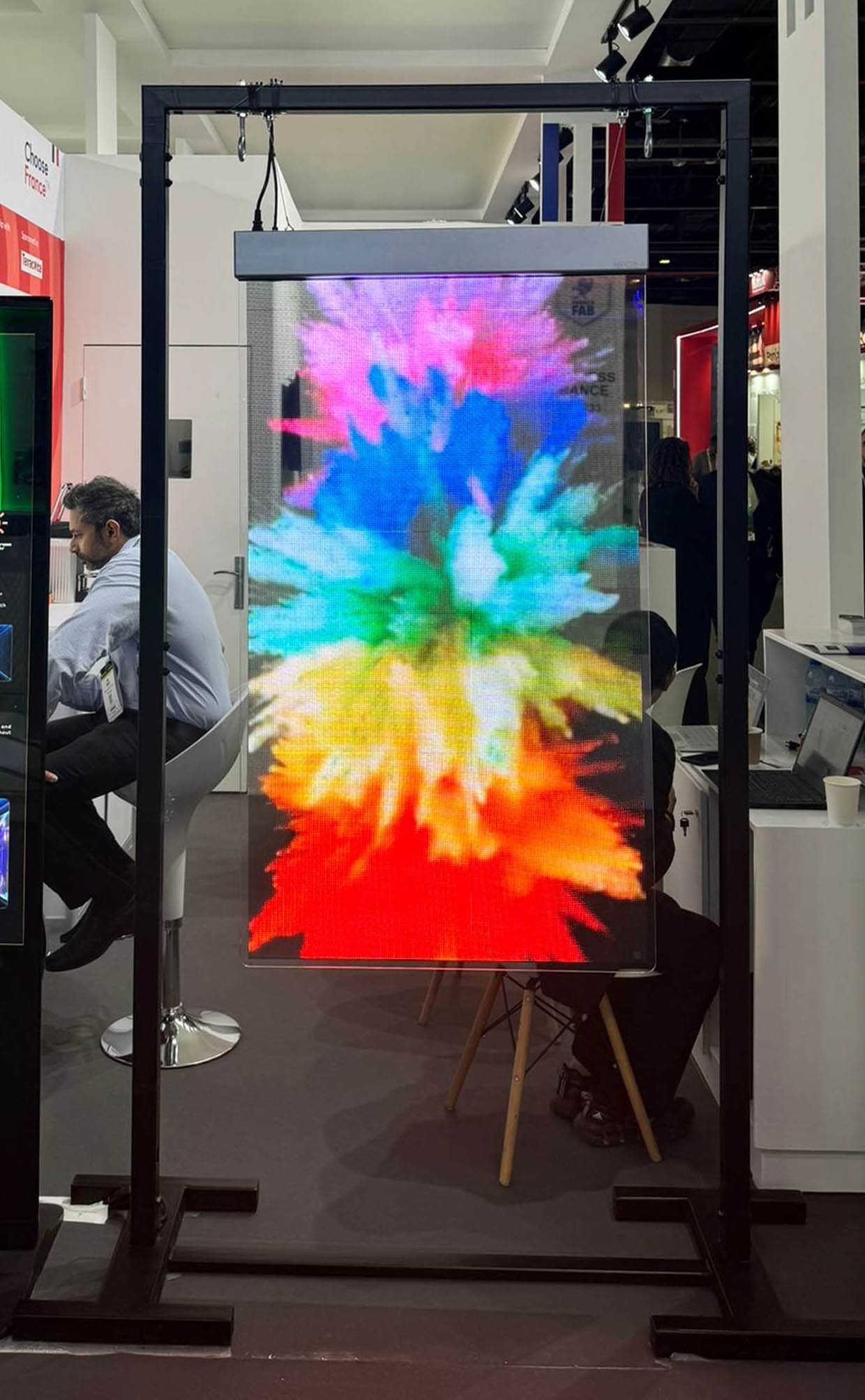
OLED: Consumption According to Displayed Content
An OLED screen operates without backlighting; each pixel is self-emissive, meaning it can be turned on or off independently. This allows reducing energy consumption when the image displays large dark areas. Thus, at an equivalent size, an OLED TV requires less power than a classic LED screen, whose backlighting remains on across the entire surface. However, in very bright scenes, the consumption approaches that of an LED screen, as more pixels must operate at full intensity.
- Self-emissive without backlighting: each pixel produces its own light and can be completely turned off, offering deep blacks and better energy efficiency.
- Varies by image: the power used varies considerably between dark and bright scenes, unlike LED screens that maintain constant backlighting.
- Efficiency on dark content: a black background allows a significant drop in consumption in watts, exceeding the savings achievable with LCD technology.
- Average lower consumption: with varied usage, OLED maintains an energy advantage while offering exceptional contrast.
Although this high-end technology represents a larger investment at purchase, it allows energy savings over the long term. However, for 24/7 continuous use, the LED screen may offer a better cost-to-energy ratio, especially when the budget is limited.
Plasma and LCD: The Most Energy-Hungry Technologies
Plasma TVs have an annual consumption of around 848 kWh, which is five to six times higher than an average LED LCD screen at around 147 kWh. Plasma therefore requires high power, generates a lot of heat, and is not suitable for permanent installations where energy efficiency is paramount.
A 55-inch plasma model requires around 290 watts in standard use, nearly double an equivalent LED model. This high energy consumption and heat output explain the decline of plasma technology since the advent of high-brightness LED screens, which are much more energy-efficient.
Impact of Screen Size and Resolution
Screen size has a direct influence on consumption: each increase of approximately 10 inches results in a 15 to 20-watt increase in power, regardless of the technology. Thus, a 65-inch LED screen consumes around 150 watts, while an equivalent CCFL model regularly exceeds 200 watts, confirming the energy advantage of LED.
- 55-inch LED: 80–90 W, or 92–110 kWh/year — an optimal solution for storefronts or meeting rooms.
- 65-inch LED: 150 W, or 164–180 kWh/year — ideal for auditoriums or rooms of 20 to 30 m².
- 4K LED resolution: a 55-inch model consumes around 95 watts, compared to 130 watts for an LCD CCFL, representing an approximate 27% saving.
- 8K resolution: regardless of the technology, the consumption increase remains limited to 10–15%, with LED maintaining its energy lead.
Used 3 to 5 hours per day, a 55-inch LED TV consumes around 0.4 kWh per day, or 146 kWh per year, compared to 0.8 kWh daily for a CCFL LCD. The gap in watts widens even more for larger sizes, allowing a significant reduction in energy consumption and annual electricity bills.
Optimizing Consumption with Energy Modes
Beyond the initial technology choice, modern TV software options offer solid levers to reduce consumption. Eco mode, local dimming, and well-managed standby thus become the pillars of a coherent energy strategy.
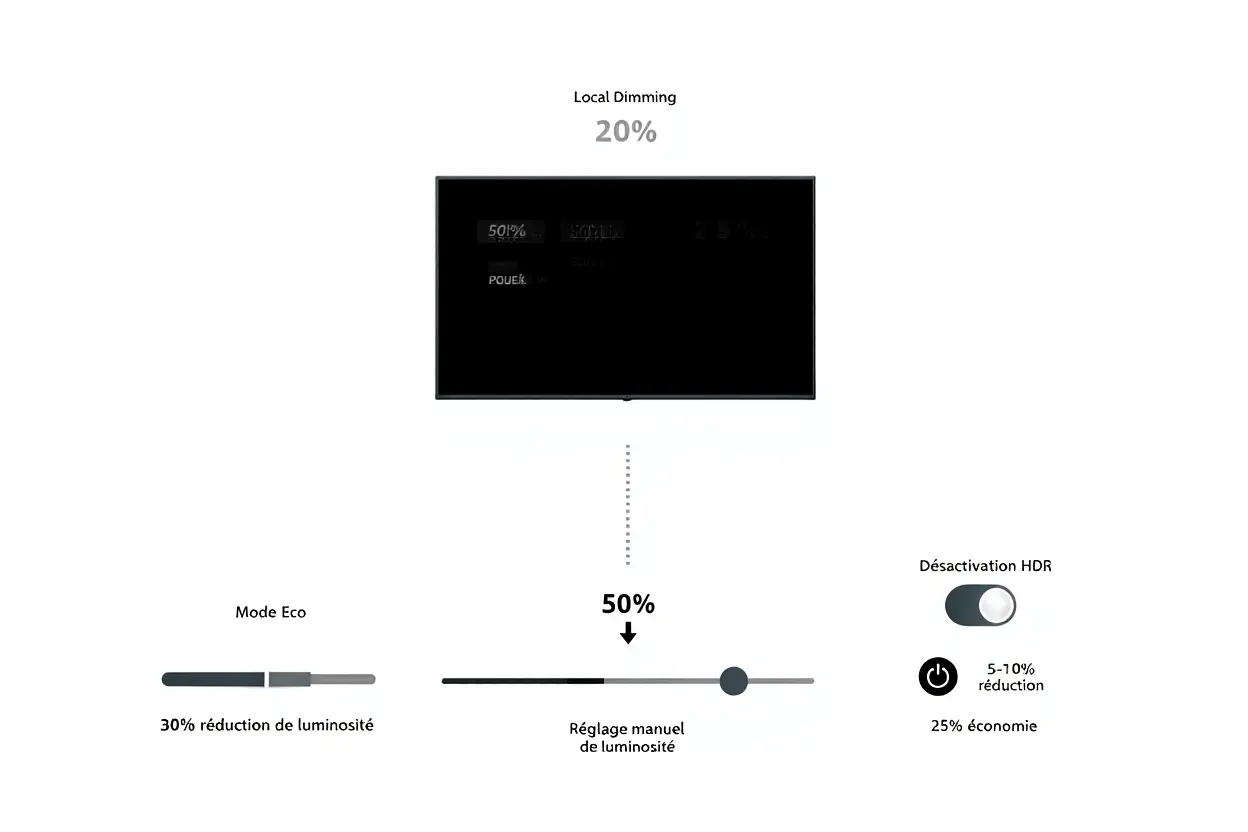
Eco Mode and Effective Brightness Settings
Enabled by default on most LED screens, eco mode reduces brightness by approximately 30% and lowers electric power consumption by 10% to 20%. Energy efficiency remains high, without degrading the visual experience or increasing heat output.
By manually reducing brightness by half, an LED TV sees its power drop by approximately 30%, compared to 25% for a CCFL LCD. This immediate action allows any user to reduce consumption without additional cost or hardware modification.
- Eco mode enabled: 10% to 20% reduction in electric power consumption, ideal in quiet workspaces.
- Brightness reduced by 50%: 30% reduction in power on LED, 25% on LCD, a quick solution for reducing consumption.
- HDR deactivated: 5% to 10% energy savings by eliminating a very power-hungry image processing mode.
Disabling HDR on an LED TV saves 5% to 10% of energy, as the function stresses the processor and peak brightness more. In a professional context, this setting offers a relevant compromise between image quality and energy management.
Standby Management and Phantom Consumption
Thanks to local dimming technology, the LED screen locally cuts dark areas and saves around 5% of energy while enhancing contrast. This approach combines visual performance and energy efficiency, making it ideal for storefronts or permanent displays.
In standby, a modern TV consumes only 0.3 to 0.5 watts, or 2.5 to 4 kWh per year. Completely cutting power via a power strip avoids 8 to 10 kWh of phantom consumption and reduces the bill by approximately €1.50 to €1.80, especially as connected modules can draw an additional 0.5 to 2 watts in prolonged standby.
Economic Impact and Total Cost of Ownership
Evaluating the replacement of an LCD screen with an LED model reveals notable savings that go beyond a simple watt-by-watt consumption comparison. Thanks to its extended lifespan, reduced maintenance needs, and lower environmental footprint, the financial picture improves significantly over several years, while limiting overall electricity consumption.
Concrete Savings on the Electricity Bill
Consider a 55-inch LED screen used 5 hours per day: its consumption is around 0.4 kWh daily, or 146 kWh per year. An equivalent LCD TV with CCFL backlighting reaches 0.8 kWh per day, or 292 kWh per year. This gap allows saving between €9.70 and €12 annually on the electricity bill, based on an average rate of 0.18 €/kWh. These recurring savings eventually offset and exceed the purchase premium of an LED screen.
- Light domestic use: 2 hours of daily use generates an annual saving of 73 kWh, representing approximately €13.14 less on the bill.
- Intensive 24/7 use: you can save up to 438 kWh per year, or nearly €78.84, which amounts to €394.20 over a five-year period.
- Business with 10 screens: switching from LCD to LED reduces total power from 500 to 800 watts and allows saving up to 3,000 kWh, or approximately €540 per year.
With electricity consumption 30% to 50% lower, the LED screen also contributes to reducing CO₂ emissions linked to energy production. For any organization seeking to improve its energy balance and carbon footprint, this transition represents an action that is both measurable and profitable.
Lifespan and Maintenance: LED Advantages
LED diodes have a lifespan reaching 80,000 to 100,000 hours, while CCFL tubes generally last around 60,000 hours. This doubled longevity limits backlighting replacements and reduces maintenance costs. Over five years, the TCO (total cost of ownership) shows that an LED TV consumes around 2,190 kWh less than an equivalent LCD model, further reducing the electricity bill.
Furthermore, an LED screen emits around 30% less heat than an LCD with CCFL backlighting. This reduces ventilation and air conditioning needs, especially in commercial spaces. A lower internal temperature also helps protect electronic components, extending their lifespan and improving the TCO of fixed installations.
Purchase Tips to Optimize Energy Consumption
Choosing a screen rated A+ or higher on the energy label guarantees optimal energy performance, without compromising image quality. All our FlexLedLight LED screens meet these demanding standards, helping you manage your consumption and preserve the environment.
Matching the screen size to the installation room is essential: a diagonal that is too large can increase electricity consumption by up to 30%, without providing additional visual comfort. For a living room of around 20 m², a 55-inch model is generally sufficient. In a professional environment, finding the right balance between screen size and viewing distance optimizes both visual comfort and energy efficiency.
- Check the energy label: prioritize A+ and higher classes; avoid C or lower classes, now considered obsolete.
- Use a switched power strip: completely cutting power eliminates between 8 and 10 kWh per year of phantom consumption for each TV.
- Activate Eco functions: options like automatic shut-off timer, local dimming, and 20% reduced brightness can generate up to 15% additional energy savings.
Opting for repair or choosing a used appliance are also effective ways to extend screen lifespan, reduce resource consumption, and support a responsible energy approach. For businesses, this circular economy strategy fits perfectly within CSR objectives, while permanently lowering operational costs.
Frequently Asked Questions
What is the electricity consumption difference between an LCD screen and an LED screen of the same size?
For the same size, an LED screen requires between 30% and 50% less energy than an LCD model with CCFL backlighting, while delivering the same brightness. For example, a TV of 55 inches with CCFL technology uses around 120 watts, or an annual consumption of 132 kWh for three hours of daily use. In comparison, an equivalent LED model uses only 80 watts (92 kWh per year), saving 40 kWh and nearly €7.20 on the bill. Considering continuous use, the gap becomes even more significant: a 2 m² LED screen consumes 120 watts, compared to 170 watts for a similar LCD, saving nearly 438 kWh of energy each year.
Do LEDs really consume less energy than LCDs?
Independent measurements from ADEME confirm this energy superiority: most LED screens receive an A-/A+ energy label, while LCDs with CCFL backlighting generally fall between B- and C-. Their luminous efficiency thus goes from 20–30 lumens per watt for CCFL to 40–50 lm/W for diodes, meaning they produce about twice as much light for the same amount of energy. In a professional context, replacing ten CCFL LCD screens with LED models reduces the required power from 500 to 800 watts and allows saving between 2,000 and 3,000 kWh per year, a reduction of €360 to €540 on the electricity bill.
Which TV technology consumes the least energy?
For continuous use, LED technology remains the best compromise thanks to its reasonable energy consumption, long lifespan, and manageable overall cost. OLED screens may sometimes show lower consumption on very dark images, but their price remains higher. On the other hand, plasma TVs consume five to six times more energy — around 848 kWh per year versus 147 kWh for an LED model — making them poorly suited for sustainable use. In practice, opting for an LED screen guarantees low watt usage, a lifespan of 80,000 to 100,000 hours, and a return on investment of five to seven years through cumulative energy savings.