
This article resolves your dilemma: what is the best choice between an LED TV and an OLED TV? We help you choose between LCD, QLED, and Mini LED technologies based on your actual needs for brightness, contrast, and budget, so you can invest with confidence in the TV that suits you best.
Contrast and blacks: OLED dominates over LED
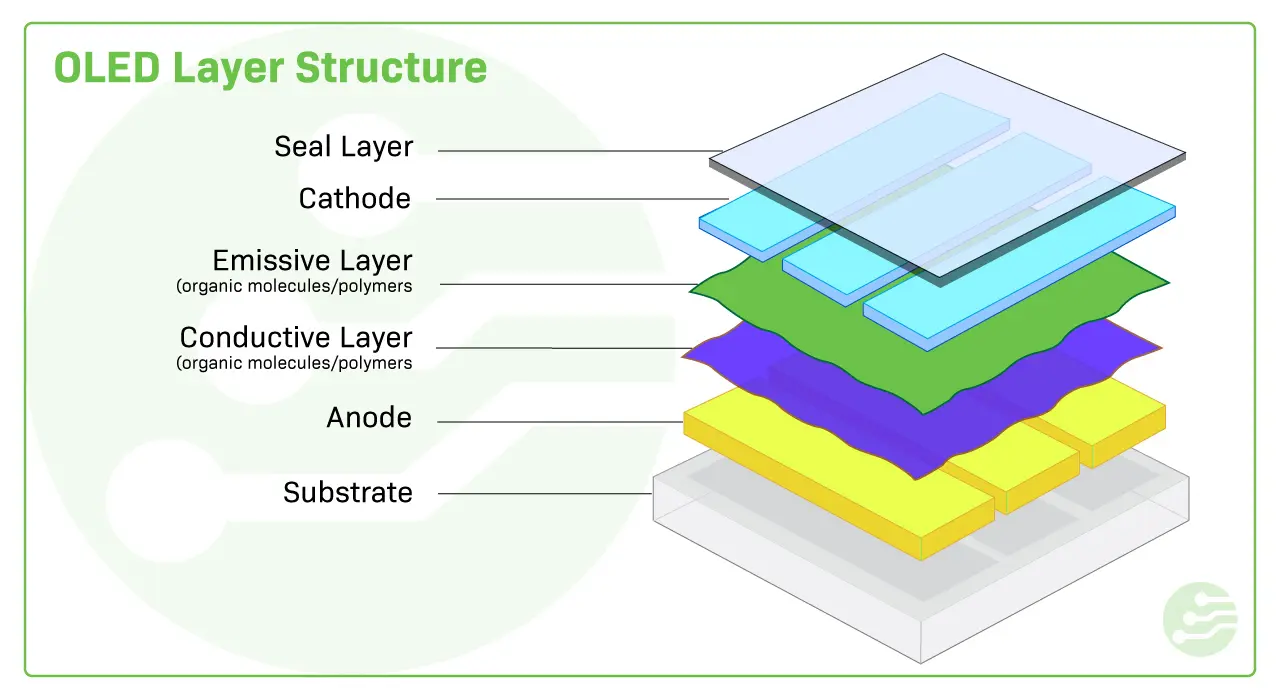
OLED technology revolutionizes black reproduction through its self-emissive pixels, which can turn off individually and completely. Each pixel generates its own light, making the traditional backlight system unnecessary. This unique approach delivers infinite contrast and black levels of a depth simply unattainable for conventional LED technologies.
Why OLED produces perfect blacks
When putting an OLED vs LED side by side, the superiority of OLED is immediately striking. To display the color black, OLED pixels simply switch off, producing no light emission at all. This process eliminates any light leakage and guarantees true black, devoid of the slightest grayish haze, ensuring exceptional contrast at all times.
This precise pixel-by-pixel switching reveals incredible detail richness in the darkest scenes. It is an invaluable quality for cinema enthusiasts watching their films in a darkened room. Likewise, gamers benefit from optimal visibility even in the darkest corners of their gaming worlds.
LED backlight limitations and halo effects
The main weakness of LCD screens in terms of contrast comes from their backlight system. Since the diodes located behind the panel remain constantly lit, a faint residual glow persists even when the displayed image is supposed to be black. This technical limitation prevents reaching absolute black and negatively impacts overall contrast.
- Edge-Lit LED: LEDs are positioned at the screen edges, allowing a very thin design, but at the cost of uneven brightness and halos that are very visible.
- Full-Array LED: LEDs distributed across the entire back surface, with local dimming zones, improve uniformity without completely eliminating the halo effect.
- Visible blooming: Halos of light, called blooming, appear around white or very bright objects on a black background, a defect particularly pronounced on Edge-Lit or entry-level Full-Array models.
Although LCD screens use local dimming techniques to minimize these halos, they never manage to completely suppress the residual glow. Even QLED panels, which use quantum dots to boost brightness, remain subject to the physical constraints of LCD backlighting, thus limiting their contrast potential.
Mini LED improves contrast without matching OLED
Mini LED technology represents a significant advance for LCD TVs. By using thousands of tiny diodes distributed behind the panel, it allows much more precise and granular light control. The result is a notable improvement in contrast ratio and a visible reduction in halos, compared to traditional Full-Array systems. However, even with these advances, Mini LED cannot reproduce the infinite contrast or perfect blacks of an OLED panel.
Maximum brightness: QLED and Mini LED lead
In very bright rooms, brightness remains the main advantage of modern LED technologies. Where OLED reaches a more modest ceiling, QLED and Mini LED TVs consistently exceed 1000 nits. This difference is decisive for a very well-lit living room or for professional applications such as digital signage.
QLED exceeds 1000 nits for bright rooms
QLED technology easily reaches peaks of 1000 to 2000 nits, combining a powerful backlight with quantum dots. This elevated brightness guarantees optimal visibility, even facing a sunny window. HDR content benefits greatly from this power, offering color rendering that is vivid and spectacular.
- Extreme brightness peaks: The latest QLED models can reach up to 1500 or 2000 cd/m² for a visually stunning impact.
- Quantum dots amplify brightness: These nanocrystals expand the color palette while maintaining the intensity of the backlight.
- Adaptability to lighting conditions: This is the ideal solution for very bright living rooms, open kitchens, or commercial spaces.
- Professional HDR advantage: High brightness allows faithful reproduction of the brightest details in HDR content.
QLED screens maintain stable brightness regardless of displayed content. Unlike OLED, their energy consumption remains constant, even when displaying very bright scenes. This reliability makes them perfectly suited for intensive professional use.
OLED limited in brightness but sufficient indoors
The OLED screen generally peaks between 600 and 800 nits, performance inferior to that of QLED and Mini LED. While this limit may be noticeable in direct sunlight, it is more than sufficient for most indoor environments. In a dimly lit room, this technology offers exceptional image quality.
It is in a dark gaming room or a home cinema that OLED reveals its full potential, free from any backlighting. The best OLED screen promises an immersive experience unmatched thanks to its perfect blacks. Even if QLED offer better brightness, they do not match this infinite contrast in black.
Professional LCD screens for outdoor signage
For outdoor signage, extreme brightness levels are required, which OLED cannot provide. Professional LCD screens offer 5000 to 10000 cd/m² to remain perfectly readable in full sunlight. FlexLedLight designs these custom solutions for facades or advertising panels in urban environments.
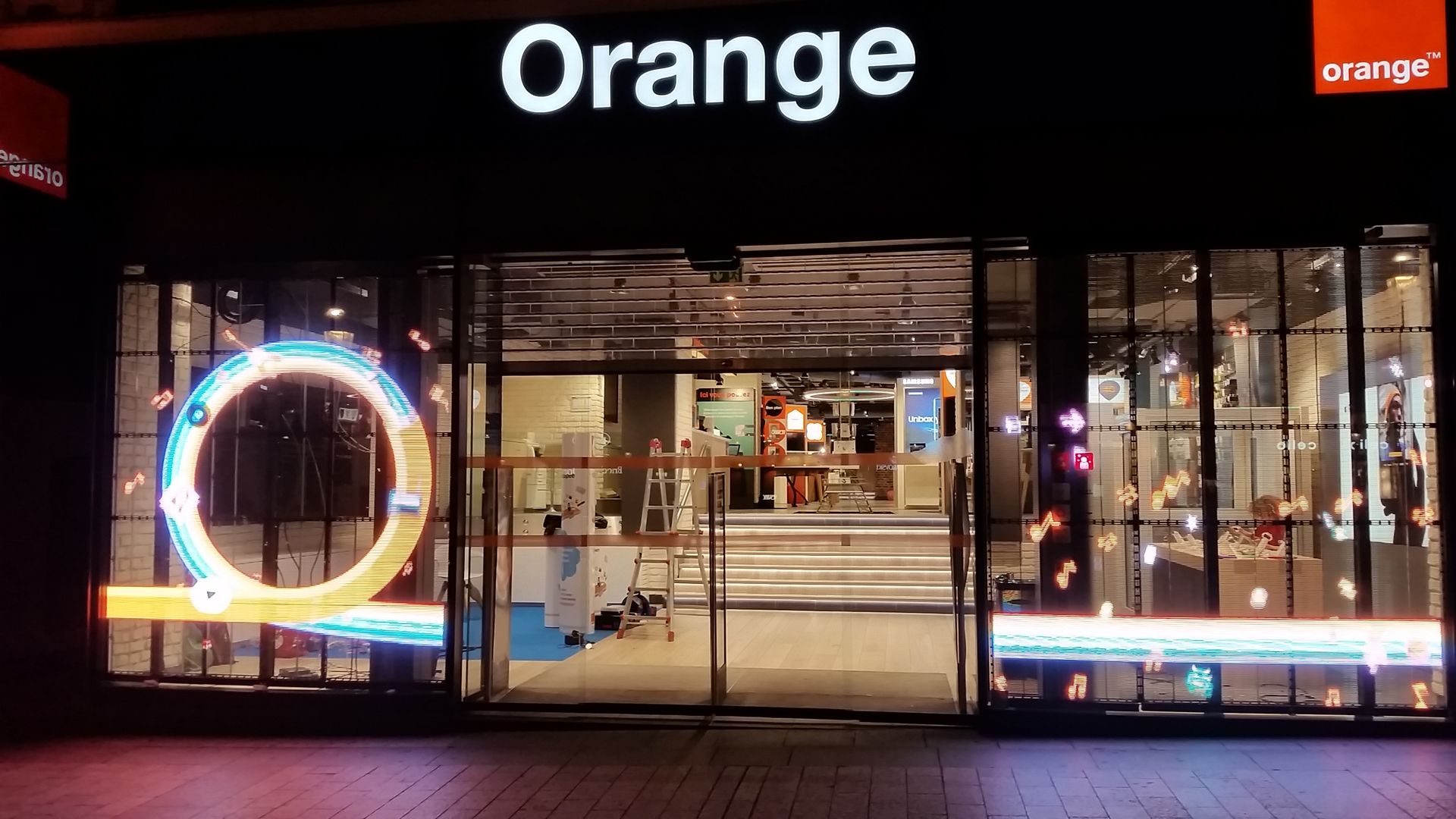
FlexLedLight’s transparent walls combine high brightness with great visual discretion to integrate into any environment. These systems sometimes use quantum dots to enhance color rendering while maintaining the necessary intensity. Moreover, the modules are individually replaceable, which greatly simplifies maintenance.
For offices, standard LCD screens offer intermediate brightness that reduces eye strain during prolonged use. This balanced approach is perfect for indoor spaces requiring display that is both clear and comfortable. Finally, professional LCD screens feature wide viewing angles, ideal for meeting rooms.
TV lifespan and reliability: OLED vs LED
Durability is a key differentiating criterion between these two technologies. While the lifespan of an OLED TV is limited by the degradation of its organic components, LED technologies, including QLED and Mini LED, can easily exceed 60,000 hours. This increased reliability directly affects the long-term return on investment of your purchase.
OLED burn-in: real risk with intensive use
Burn-in, or screen marking, remains the main threat to the longevity of OLED screens. This persistence phenomenon appears when a static image remains displayed for too long, permanently damaging the pixels. Fixed elements, such as channel logos, then leave a residual visible trace even when the image changes.
- Burn-in on static images: Static logos or video game interfaces can cause persistent persistence after 500 to 1000 hours of continuous display.
- Organic degradation: The OLED layer progressively loses brightness, with blue and red pixels aging faster than green ones.
- Sensitivity to humidity: Organic components deteriorate faster in humid environments, shortening lifespan in a room like a kitchen or bathroom.
- Insufficient software protections: Techniques like pixel shifting reduce the risk of burn-in, but do not completely eliminate it during intensive professional use.
Recent models attempt to remedy this problem with systems like pixel shifting, which slightly moves the image. However, these software solutions remain insufficient for continuous display, such as on an information panel. For more occasional home cinema use, a refurbished TV allows you to benefit from the advantages of OLED at a more affordable price.
LED and QLED exceed 60,000 hours of use
TVs using LED technologies offer remarkable reliability, with an estimated lifespan between 60,000 and 100,000 hours. This equates to more than ten years of continuous use, or twenty years at a few hours per day. Mini LED and QLED retain this robustness without premature degradation, completely eliminating the burn-in risk compared to OLED.
These screens perfectly handle prolonged display of static images without fear of permanent marking. Commercial installations continuously broadcasting logos can thus operate without interruption for years. This total immunity often justifies the choice, in the OLED vs LED debate, in favor of LED technologies for demanding professional environments.
| Technology | Estimated lifespan | Burn-in risk | Energy consumption |
| OLED | 30,000–40,000 hours | Very high | Variable depending on content |
| QLED | 60,000–100,000 hours | Non-existent | Stable and moderate |
| Mini LED | 60,000–100,000 hours | Non-existent | Zone-optimized |
| Standard LCD | 50,000–80,000 hours | Non-existent | Moderate |
Energy consumption of an OLED screen varies considerably: it is very low on dark tones, but increases significantly during very bright scenes. Conversely, a modern TV using LCD consumes up to 50% less energy than an older CCFL tube model, at brightness equivalence. For continuous commercial use, this energy efficiency helps reduce operating costs, despite sometimes higher initial purchase price.
How to choose the best screen based on your needs
Choosing between different display technologies depends essentially on your usage. Cinema enthusiasts will often prefer OLED for its exceptional performance in controlled lighting conditions, while competitive gamers will appreciate its extremely fast response time.
For very bright spaces or intensive professional use, QLED and Mini LED technologies emerge as sensible choices. Ultimately, an evaluation of brightness, contrast, and your budget will enable you to make the best choice.
OLED for cinema enthusiasts and demanding gamers
Choosing an OLED screen means betting on superior image quality, particularly in a lighting-controlled environment. Cinema enthusiasts love its unique cinema rendering, highlighted by deep blacks and high contrast. Although the absence of backlighting limits maximum brightness, it significantly strengthens the sense of immersion in dark scenes.
The most demanding gamers also benefit from an ultra-fast response time, often under 0.1 ms. This speed eliminates any blur effect, which is decisive for dynamic games.
- Absolute blacks and infinite contrast: Each OLED pixel switches off individually, creating perfect black, impossible to achieve on a standard LED screen.
- Ultra-fast response time: With a delay under 0.1 ms, OLED eliminates trails and significantly outperforms the responsiveness of LCD screens.
- Wide viewing angle: Unlike LCD screens whose image fades at the sides, OLED maintains faithful colors and stable contrast regardless of the viewing angle.
- Precise color rendering: Since each pixel generates its own light, color precision remains impeccable even in the darkest content.
These screens are perfect for graphic designers and photographers seeking absolute color fidelity. They are indeed often the standard in post-production for precise film color calibration. In a dedicated dark home cinema, a dimmed room reveals the full potential of these perfect blacks and this exceptional contrast.
QLED and Mini LED for bright rooms
If your room is very bright, the best screen will likely be a QLED or Mini LED model. OLED technology may lack the power to effectively combat reflections from a large window. These display technologies achieve very high brightness levels, guaranteeing perfect visibility even in full daylight.
The vibrant colors produced by quantum dots retain their full visual impact under intense ambient lighting. For very exposed commercial spaces, FlexLedLight offers specific solutions adapted for storefronts. In an open living room or a sunny kitchen, high brightness is essential to counter glare.
High-end QLED models also offer elevated refresh rates for gamers. Mini LED technology, meanwhile, combines high brightness with precise local dimming for stunning color and contrast rendering.
Standard LED offers the best value for money
For most users, traditional LCD and LED screens represent the best value for money on the market. This proven technology is much more affordable than OLED, while still being very performant for everyday use. With attractive prices, it is possible to acquire large screens without exceeding your budget.
The standard LED screen is also a robust choice, with a longevity that often exceeds a decade. The complete absence of burn-in risk (screen marking) is a reassuring argument for intensive use. In a professional environment, these screens provide good visual comfort through well-managed brightness that reduces eye strain.
FlexLedLight also designs transparent screens for businesses seeking to combine innovation and cost management. For ambitious architectural projects, modular LED walls allow covering large surfaces homogeneously. The final choice between LED or OLED will thus depend on your priorities: pure image quality or intense brightness.
Frequently Asked Questions
What is better between LED, QLED, and OLED?
There is no single answer, as each of these technologies excels in a specific area. OLED screens offer exceptional image quality thanks to their infinite contrast, making them perfect for watching movies or gaming in a dark room. Conversely, QLED stands out with its very high brightness and vivid colors, ideal for enjoying HDR content in very bright environments.
Traditional LED technology TVs, meanwhile, often offer the best balance for everyday use. They are the logical choice if you are primarily looking for excellent value for money. Your final decision will thus depend on your priority: absolute image fidelity, maximum clarity, or budget and durability considerations.
What are the major drawbacks of OLED?
The main flaw of OLED technology is the risk of permanent screen marking, also called burn-in. Displaying static elements (such as logos or news bars) for extended periods can indeed leave indelible traces on the screen, which may be problematic for certain video games or applications. Additionally, its maximum brightness is often lower than that of other technologies, which can be problematic in a very sunny room.
Its lifespan is also shorter, generally estimated between 30,000 and 40,000 hours. These screens are also more sensitive to humidity and require a bit more caution. Finally, the higher purchase price of this technology may be a deterrent for more modest budgets.
Which technology lasts the longest without degradation?
Screens using traditional LED technologies, QLED or Mini LED generally show superior longevity, easily exceeding 60,000 hours of operation. This equates to more than ten years of intensive use with zero burn-in risk, while maintaining their brightness and color vividness. In comparison, OLED offers a more limited lifespan, around 30,000 to 40,000 hours, with faster pixel degradation.
Even if OLED offers unmatched contrast, its long-term reliability is lower. For intensive professional use or a continuous-operation installation, LED technologies remain the most robust solution. It is unquestionably the option that guarantees the best durability and the best return on investment over time.