
This article clearly explains the difference between an LED screen and an LCD screen to help you choose the most suitable technology for your needs. You will discover how these two display systems work, their respective advantages, and in which situations each one excels. Explore the history of TV screens and their technologies to better understand this major evolution in the world of modern display.
How LCD and LED Screens Work
The operation of a liquid crystal display (LCD) screen relies on liquid crystals that filter the light produced by a backlighting system. To display an image, this technology absolutely needs a light source placed behind the screen. Understanding this basic principle is essential to grasp their performance.
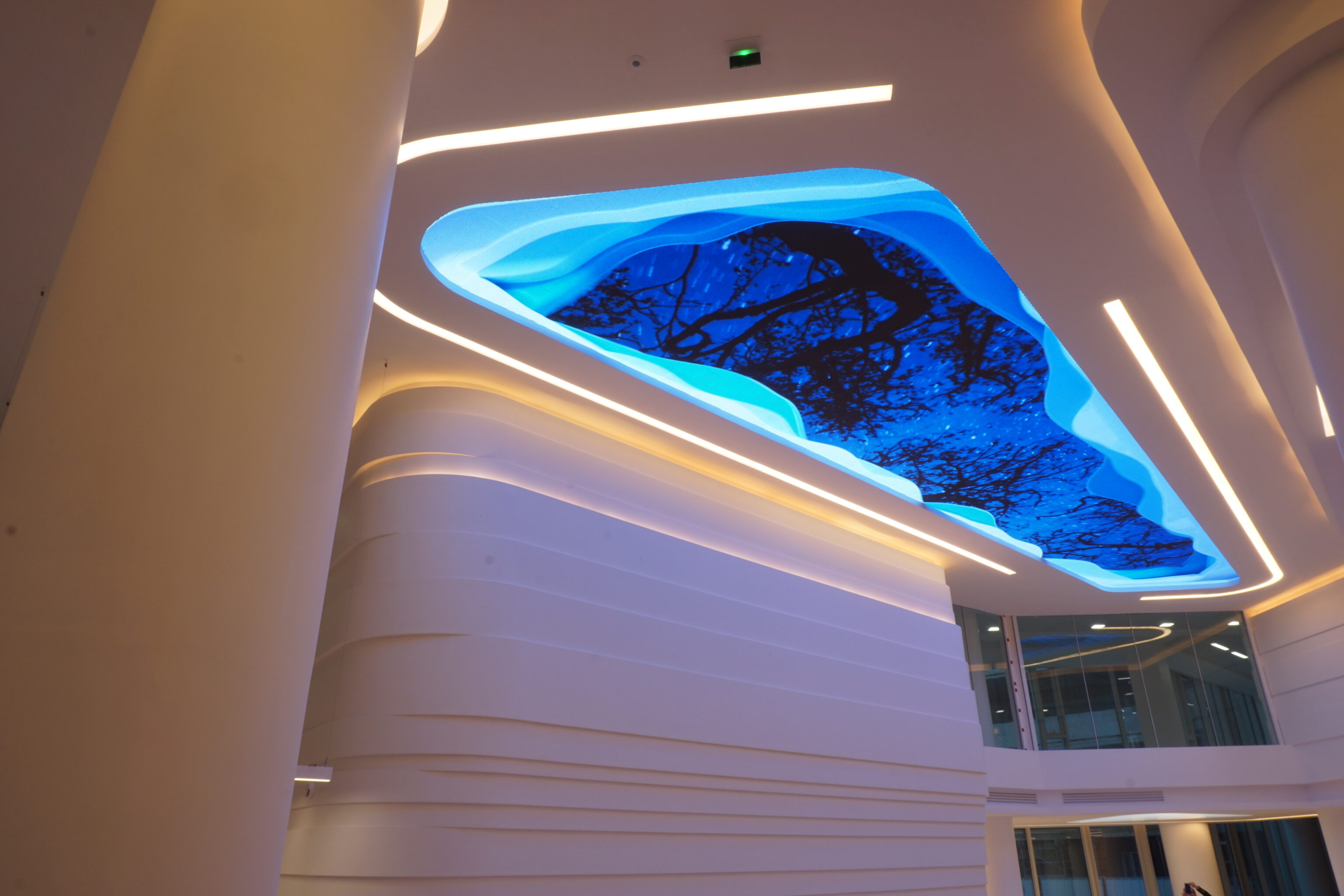
In the case of LED screens, the LEDs themselves emit light. Each LED chip (Light-Emitting Diode) contains 3 pixels of red, green and blue colours respectively. These sources therefore provide light directly and more intensely than in LCD or OLED cases (see below).
Basic Principles of Backlighting
Backlighting technology follows a simple principle: it emits intense white light behind the screen, which then passes through the liquid crystals. This indirect method is often what prevents LCD screens from displaying perfectly deep blacks. Each pixel acts like a small shutter, regulating the amount of light that passes through.
- CCFL backlighting: Uses compact fluorescent lamps placed behind the screen. Power consumption is around 30 watts for a 24-inch monitor.
- LED edge backlighting: Diodes are positioned on the edges of the screen, allowing a thinner design and reducing power consumption to around 20 watts.
- LED full-array backlighting: Diodes cover the entire surface behind the screen, offering much more precise brightness control.
- Advantages of LED: Thickness is reduced to around 5 cm (compared to 15 cm for CCFL), while offering much better energy efficiency.
Modern LCD screens almost exclusively use LED backlighting. This evolution has transformed the market, making devices thinner, lighter and much less energy-hungry.
Positioned behind the screen, the backlighting system attempts to distribute light evenly. However, this technique can sometimes create areas of uneven brightness, a defect particularly visible in a dark room.
CCFL vs LED: Technological Evolution
The CCFL vs LED comparison is a good example of evolution. The older CCFL backlighting technology is very energy-hungry and generates a lot of heat. In contrast, LED backlighting offers a much longer lifespan, reaching 50,000 hours, compared to only 20,000 hours for CCFL.
LCD screens with LED backlighting are progressively replacing older CCFL models. They are also more environmentally friendly as they contain no mercury, unlike fluorescent tubes.
OLED vs Direct LED: What’s the Difference
The arrival of OLED represents a complete breakthrough: each pixel emits its own light, eliminating any need for a backlighting system. By correcting the main defect of LCD, this technology achieves absolute black and infinitely rich contrast.
Similarly, LED panels used for professional display work like OLED: each light-emitting diode is an independent luminous pixel. Unlike conventional LCD or even OLED screens, these solutions offer exceptional modularity and enable very creative screen shapes.
So, which is better, LED or OLED? That depends entirely on your usage, budget and how much importance you place on criteria like black quality or energy consumption.
Image Quality: LCD or LED for Your Use
Final image quality largely depends on the display technology you choose. Understanding the nuances of contrast, colours and brightness is essential to select the screen best suited to your needs. Each technology indeed has its own strengths.
Contrast and Black Depth Compared
The contrast level is often the first criterion for evaluating image quality. Thanks to local dimming, screens using LED panels far surpass conventional LCDs, achieving ratios exceeding 5,000:1. A “full-array” LED screen controls the intensity of each zone independently, allowing deeper blacks. Furthermore, a recent advancement in LED screen module manufacturing involves applying a black resin layer on the surface between the LEDs, which considerably improves black contrast.
Colour Gamut and Chromatic Accuracy
The intensity of black contrast is also linked to the extent of the colour gamut the screen can reproduce. The most recent LED screens cover the DCI-P3 cinema colour space, clearly surpassing the sRGB standard of conventional LCD screens. This translates concretely to approximately 35% superior colour richness.
- Conventional LCD screens: They are generally limited to sRGB space, which works perfectly for office work and standard display.
- QLED technology: These LED panels incorporate a quantum dot layer that considerably improves colour purity and accuracy.
- Full-array LED screens: They offer an extended colour gamut while ensuring excellent chromatic uniformity across the entire screen surface.
For graphic designers, IPS LCD panels guarantee exceptional chromatic accuracy. However, this performance is limited by the constant backlighting system located behind the liquid crystal screen.
Brightness and Viewing Angles in Practice
Professional-grade LED panels can achieve brightness between 5,000 and 10,000 cd/m², making them perfect for display that is perfectly visible even in direct sunlight and at all latitudes. Conversely, conventional LCD screens typically cap around 500–800 cd/m², limiting them to indoor use.
Regarding viewing angles, LED technology maintains colours and brightness stably up to 120 degrees. While IPS LCD screens can reach 178 degrees, TN versions see their image quality drop from as little as 30 degrees — a critical difference in professional settings.
Durability and Comfort: Which Screen to Choose
Beyond pure image quality, other factors such as visual comfort and environmental impact are decisive in your choice. These aspects become essential when planning the purchase of a giant screen intended to operate continuously.
Power Consumption and Environmental Impact
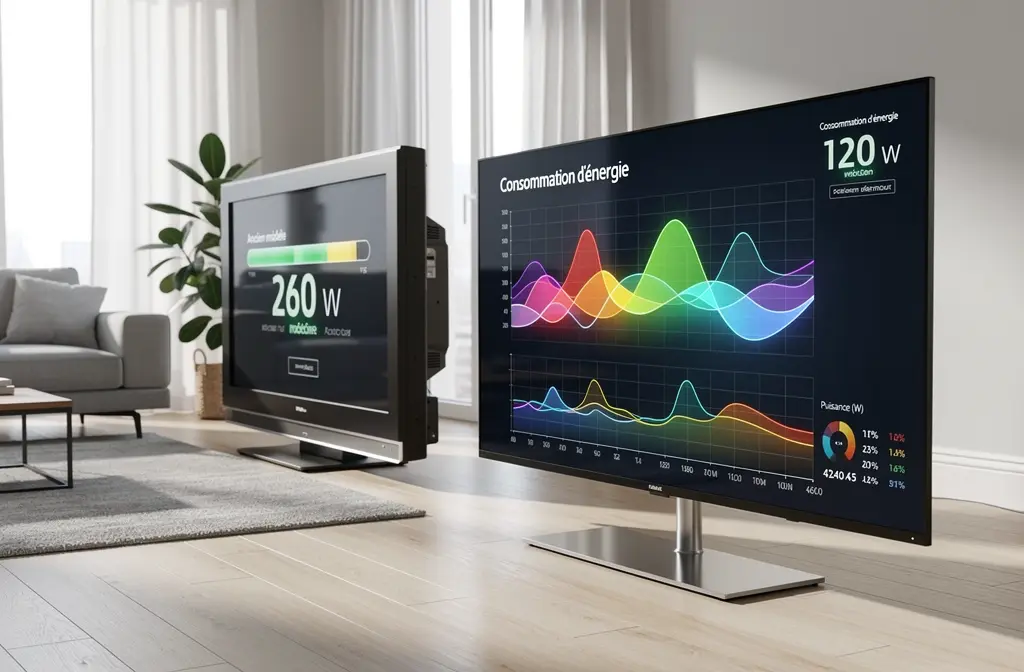
Energy consumption is a major issue for any permanent display installation. At equivalent brightness, screens using LED technology consume 30 to 50% less than a conventional CCFL backlighting system. A 65-inch LED television requires approximately 80 watts, compared to 120 for an LCD CCFL model.
- LED energy efficiency: It allows a 40% reduction in CO₂ emissions over the entire lifespan of the device.
- No mercury: Each diode is manufactured without mercury, unlike CCFL, which facilitates recycling and reduces toxicity by 90%.
- Better thermal dissipation: Less intense heat improves the reliability of internal components by approximately 40%.
- Reduced operating cost: The initial investment is generally recouped quickly, often within three to five years.
Over ten years, this difference in consumption saves several thousand kilowatt-hours. For a business open permanently, these energy savings largely justify the higher initial cost.
Which Screen Type Is Least Tiring for the Eyes
The lifespan of LED diodes is generally between 30,000 and 50,000 hours, with some models exceeding 100,000 hours. In comparison, CCFL lamps last only 10,000 to 20,000 hours, requiring much more frequent replacements.
- Better contrast: It reduces eye fatigue by displaying deeper blacks and improving readability.
- Moderate blue light: Modern screens often include designed filters to mitigate this effect.
- Automatic night mode: Brightness adjusts progressively according to the time of day, helping to respect your biological rhythm.
- Display stability: Unlike older CCFL LCDs, this technology eliminates flickering, which is harmful to the eyes.
Whatever screen type you choose, the 20–20-20 rule remains the best prevention. Every 20 minutes, look at a point 20 feet (6 m) away for 20 seconds to rest your eyes effectively.
Installation and Modularity According to Your Needs
Giant LED screens assemble somewhat like Lego bricks, offering excellent flexibility. This modularity makes it possible to design entirely custom formats, impossible to achieve with standard LCD sizes.
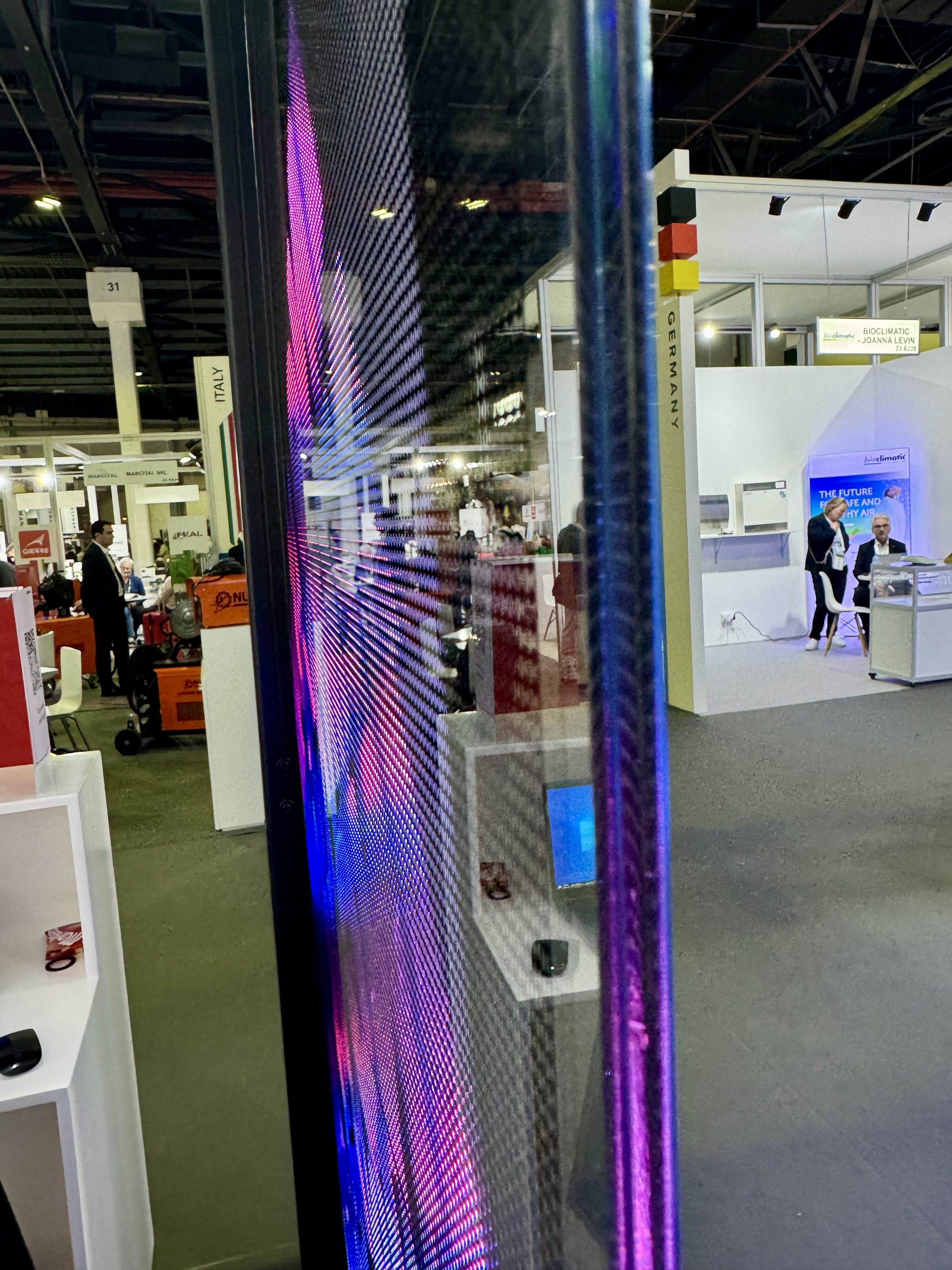
Professional LED panels adapt to all configurations, including curved shapes or even a transparent appearance. It is therefore possible to replace ten conventional monitors with a single LED wall, optimising both space and energy.
For outdoor use, LED screens benefit from IP65+ protection, allowing them to perfectly withstand the elements. LCD models cope poorly with these conditions and offer mediocre visibility in direct sunlight, unlike LED technology.
LCD or LED for Professional Use
The choice between these technologies varies considerably depending on the professional context and the intended usage environment. Indeed, a store highly exposed to sunlight, a standard meeting room, or a graphic design studio do not require the same display solutions.
Commercial Applications and Creative Installations
For a storefront subjected to strong sunlight, the priority is very high brightness, generally measured in nits. LED panels can be assembled to create immense display surfaces in original shapes, making them perfect for branding.
Unlike conventional LCD screens, LED technology enables curved or even sinuous configurations. Companies like FlexLedLight even offer transparent screen and atypical solutions, ideal for luxury boutiques looking to innovate.
- Total transparency: A transparent screen allows video content to be broadcast without masking the view of products in the storefront.
- Design flexibility: It becomes possible to model 3D shapes or cylindrical columns, offering great creative freedom.
- Bezel-free: Unlike conventional LCDs, LED panels provide a continuous image without visual interruption caused by borders.
- Architectural adaptation: The installation can perfectly follow the lines of a building, for an elegant and integrated result.
While individuals now opt for increasingly larger screens, these remain often confined to 16:9 format and have visible borders. Professional solutions, on the other hand, break free from these limits and allow constraint-free shape creation.
Choice Based on Budgetary and Functional Priorities
Conventional LCD screens have a lower initial cost, which can be suitable for equipping standard meeting rooms. However, despite a moderate initial investment, their energy consumption can prove higher over the long term.
Although their purchase price is higher, LED screens offer much better visibility in daylight and superior durability for intensive use. For demanding applications like gaming, a full-array screen with a low response time remains the benchmark.
Finally, for graphic work requiring great precision, IPS technology retains certain advantages. It ensures exceptional colour fidelity, even if the contrast level can sometimes be less pronounced.
Frequently Asked Questions
Which is better, LED or LCD?
There is no universal answer, as the choice mainly depends on your usage. For a limited budget and essentially indoor, static display, an LCD screen will be perfectly suitable. On the other hand, for intensive outdoor use or creative applications, LED technology is essential.
LED screens guarantee much better contrast and significantly lower energy consumption over time. Their much longer lifespan often compensates for their higher initial cost, particularly in demanding applications.
Which screen type is least tiring for the eyes?
A screen using LED technology tends to be less straining on the eyes thanks to its excellent contrast. Deeper blacks considerably reduce glare, especially if the device includes blue light filters or a night mode. However, your usage habits influence eye fatigue more than the screen type itself.
Remember to adjust brightness according to ambient light and maintain a reading distance of 40 to 60 centimetres. It is also recommended to follow the 20–20-20 rule by taking regular breaks to rest your eyes.
What are the major differences between an LED screen and a conventional LCD screen?
A conventional LCD uses liquid crystals that filter the light from a general backlight. This technique often produces limited contrast and blacks that appear greyish. In contrast, a modern LED display uses an electroluminescent diode for each pixel, allowing ultra-precise control of brightness and switching off.
This LED technology enables approximately 40% reduced energy consumption and often tripled lifespan. It also allows innovative designs, such as a transparent screen or curved shape, offering optimal visibility and immersion even in broad daylight.