
The advantages and disadvantages of LED screens become clear when evaluated against concrete criteria: image quality, power consumption, cost, lifespan, and how they compare to an LCD screen. These benchmarks help determine whether LED technology suits a residential, commercial, or event-based application.
What Is an LED Screen and How Does It Work?
An LED screen uses light-emitting diodes to generate the light required for display. Depending on the application, LEDs serve as a backlight source for an LCD panel, or they form the pixels directly. This distinction has an immediate impact on brightness, image quality, viewing angles, response time, and ultimately the benefits of LED screens.
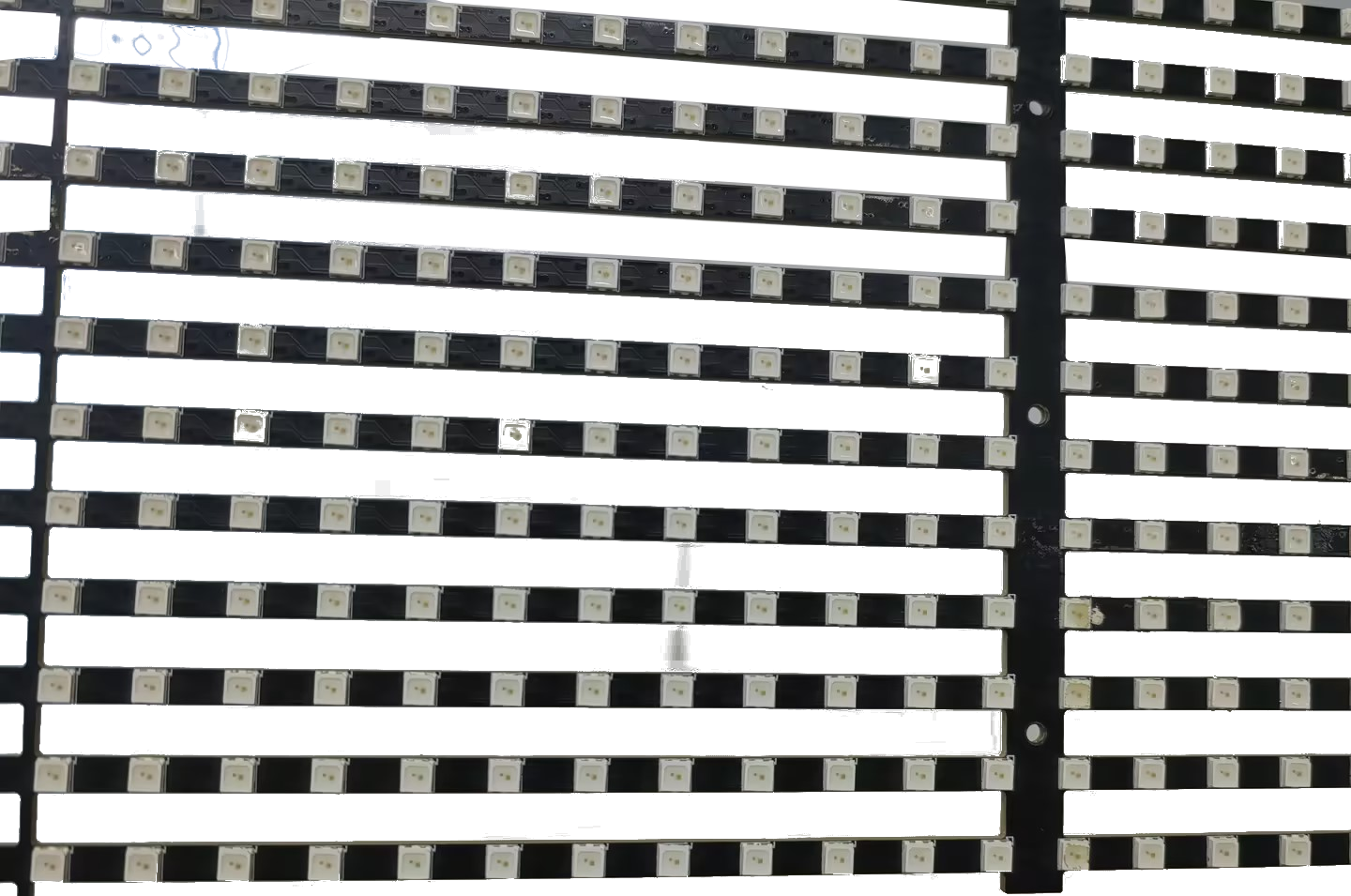
From the LED Diode to MicroLED
The first red LEDs appeared in the 1960s, paving the way for far more powerful components capable of delivering stable lighting and high-performance backlighting. With the arrival of high-brightness white LEDs, manufacturers replaced the fluorescent tubes used in older displays. The benefit extends beyond energy efficiency: the long lifespan of LEDs — typically between 30,000 and 100,000 hours depending on usage — plays a major role in real-world installations.
This evolution also enabled thinner panels and improved refresh rates across many product lines. Older CCFL systems occupied more space and generated more heat; LED solutions reduced thickness while simplifying integration. What the eye notices is a clearer, more stable display that is easier to adapt to the constraints of a given space.
Technical Performance: What the Numbers Confirm
Visual requirements and the operating environment are the first two criteria to define before any purchase. Technically, a professional LED panel can reach 5,000 to 10,000 cd/m² of brightness, whereas a standard LCD screen typically sits between 500 and 800 cd/m². In brightly lit environments, this brightness headroom becomes critical for maintaining a clear, readable image.
Lifespan is another key metric. Some LED modules approach 100,000 hours of continuous operation — roughly 11.4 years — provided operating parameters and thermal dissipation are properly managed. Performance depends on this technical foundation: a stable light source ages better and retains visual uniformity for longer.
Viewing angles also matter for real-world use. Well-designed LED panels often achieve 140° to 160° both horizontally and vertically, preserving image quality for dispersed audiences. By contrast, some LCD and edge-lit LED displays lose contrast and uniformity when viewed off-axis.
The MicroLED screen takes this logic further: each pixel is an independent LED, with no filter or backlight layer. Response time drops below a microsecond, and luminance can exceed 100,000 cd/m². Manufacturing remains complex and costly, with limited availability to certain small formats.
Modularity and Design Flexibility
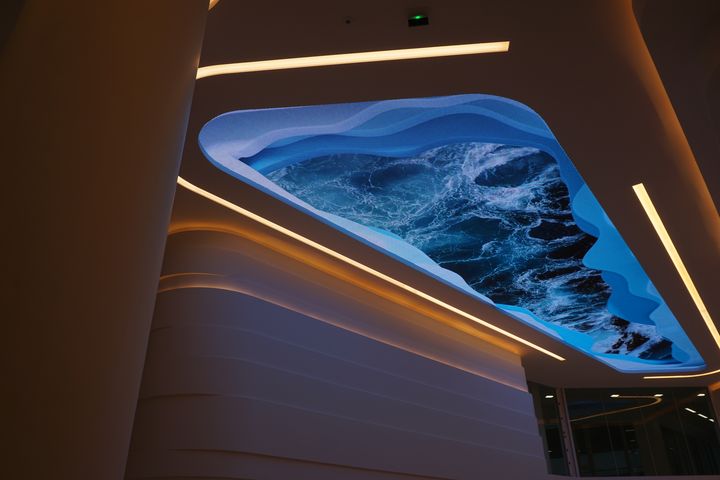
At this point, technical reading alone is no longer enough — the real difference lies in integration. Modular LED screens assemble panel by panel to create a format tailored to the space: facade, storefront, video wall, stage, or curved structure. This construction approach opens up possibilities that a rigid LCD screen handles poorly, especially when surface area, shape, or maintenance become real constraints.
- Custom shapes: curved, sinuous, spherical, or seamless, adapted to the mounting surface.
- Transparent screens: integration within a storefront or partition while allowing natural light to pass through.
- IP65+ protection: weather-resistant for outdoor installations exposed to the elements.
- Large formats: panel assembly to create large-scale display surfaces.
Custom LED screens address exactly these use cases. FlexLedLight favours a technical design tailored to the support, viewing distance, ambient light levels, and maintenance requirements. Once installed, module-by-module replacement simplifies service interventions and minimises operational downtime.
For a deeper comparison between LCD and LED screens, see this useful reference: LED screen benefits. Additionally, the basics of LED display advantages and MicroLED advantages help position each solution within the broader display technologies landscape.
The disadvantages of LED screens are real: higher initial cost, tight integration requirements for indoor use at very close viewing distances, and — depending on the model — consumption that increases with the requested brightness level. LED screens are best suited when light is part of the decor, visibility, format flexibility, and rapid maintenance are key requirements.
Image Quality and Visual Performance of LED Screens
The image quality of an LED screen rests on a precise balance: brightness, contrast, colour accuracy, and display speed. On this front, LED panels often take the lead over standard LCD solutions, especially when the installation must remain readable across diverse professional contexts.
Contrast, Colours, and Response Time
The first noticeable difference appears in dark areas. With effective local dimming, certain zones can turn off completely: blacks gain depth and contrast can exceed 5,000:1. By contrast, a system with constant backlighting leaves residual light, limiting the perceived depth on simpler LCD and LED displays.
This difference is particularly evident with HDR content, cinema, or premium signage. LED screen benefits also shine in large panoramic formats: wide viewing angles up to 160°, high brightness, and a seamless modular design enable consistent output across large surfaces — ideal when light is part of the decor.
Colour reproduction plays an equally important role. DCI-P3 coverage adds 35% more colour richness compared to standard sRGB LCDs, with 16.77 million colours available. Since light is emitted directly, without an intermediate polarising filter, colour accuracy remains more stable — even under strong ambient lighting.
Then comes fluidity. LED response time is measured in microseconds, compared to several milliseconds for LCDs: motion blur and ghosting are significantly reduced. For LED display of sports content, animated advertising, or dynamic signage, these performance gains matter greatly — especially when refresh rate and brightness are calibrated to the environment. Consumption remains manageable, as detailed here: LED screen power consumption.
4K and OLED: Two Distinct Concepts
Among the display types most often compared, one confusion recurs: the difference between 4K and OLED. 4K refers to a resolution of 3,840 × 2,160 pixels. OLED, on the other hand, is a technology where each pixel produces its own light.
4K LCD and LED screens offer high pixel density, but their blacks remain constrained by the backlight. OLED and MicroLED technologies manage these areas pixel by pixel, improving visual depth and contrast. For a professional installation, viewing distance guides the choice between 4K and MicroLED, lighting conditions determine the required brightness range, and the budget arbitrates between OLED and locally dimmed LED backlighting.
Benefits of an Ultrawide LED Screen for Professional Display
In professional applications, the advantages of an ultrawide format start with visual continuity. A large LED module display covers a wide surface without visible bezels — something LCD panels struggle with due to their fixed size and gap limitations. In a control room, the absence of bezels avoids dead zones across multi-source video feeds; in a retail space, continuous surface area amplifies the impact of animated signage.
FlexLedLight favours configurations that adapt to the venue: transparent video walls, 3D surfaces, or atypical formats shaped by project constraints. Once installed, a screen aligned with the building architecture maintains its visual impact over time — because output depends on module alignment, available viewing distance, and real ambient lighting.
LED Screen Disadvantages and Limits Compared to LCD
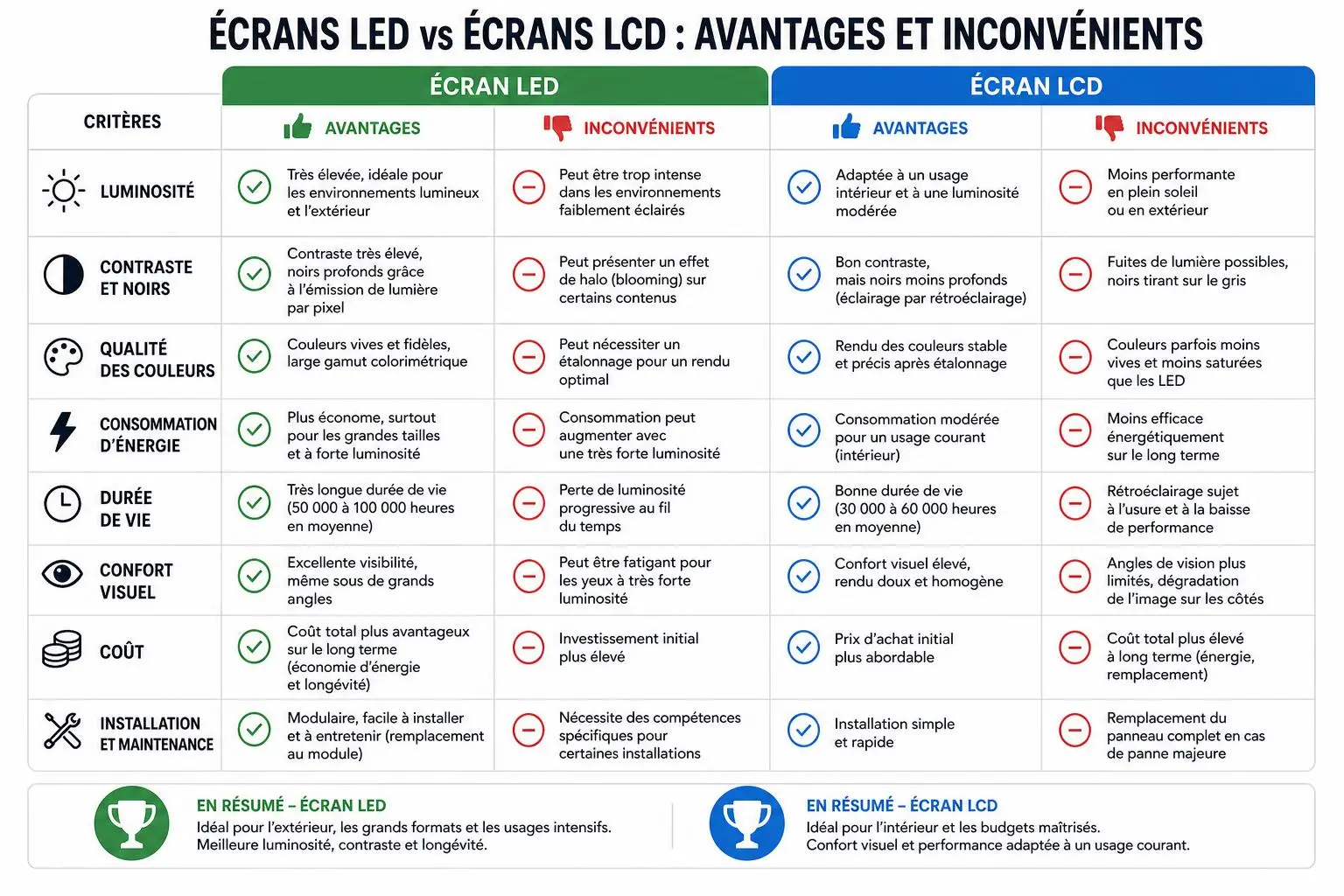
LED screen advantages are well known, but they alone don’t settle a project. To compare an LCD or LED screen methodically, you need to look at real constraints: purchase price, black level behaviour, backlighting management, angle performance, and the site’s lighting level.
Disadvantages to Know Before Investing
LED disadvantages typically come back to three points: high upfront cost, image uniformity, and thermal dissipation. For a constrained budget, the price gap with an LCD screen is tangible — driven by material costs and more demanding manufacturing processes.
- Uniformity in dark environments: on some edge-lit models, brightness is not perfectly even, especially at the edges. On grey backgrounds or uniform blacks, this can reduce the perceived contrast.
- Visual comfort: prolonged high brightness can cause eye fatigue. Without proper adjustment, the emitted lighting and blue light content may also disrupt rest during extended use.
- Maintenance: on large surfaces, a localised failure may require replacing a module or entire panel. In real-world operation, this factor weighs on ongoing costs and maintenance scheduling.
Poor heat dissipation reduces light efficiency, accelerates component wear, and directly impacts lifespan. Conversely, comfort filters, a night mode, and proper calibration improve daily use without eliminating all disadvantages.
LED vs LCD Screen: Which to Choose by Use Case
LCD screens still hold a strong position in controlled indoor environments. At standard sizes, for workstations, presentations, or clean signage, LCD and LED screens serve different requirements: LCD remains suitable when energy consumption must stay predictable for static content and when budget is the priority. The output depends on ambient lighting control and image detail requirements.
As soon as surface area grows or content must remain readable at distance, the LED screen takes the advantage through its modularity and brightness levels well beyond LCD capability. An LED screen better fits the specification — provided consumption, maintenance, and total cost of ownership are factored in from the start.
Between an LCD or LED screen, the difference comes down to integration: viewing distance, lighting intensity, need for deep blacks, mounting constraints, and amortisation horizon. Once the installation is finalised, it’s within this framework that the disadvantages of LED screens become acceptable — or not.
| Criteria | LED Screen | LCD Screen |
| Max brightness | 5,000 to 10,000 cd/m² | 500 to 800 cd/m² |
| Contrast | > 5,000:1 (local dimming) | 1,000:1 (constant backlight) |
| Lifespan | 30,000 to 100,000 h | 10,000 to 40,000 h |
| Consumption | 30–50% lower than CCFL | CCFL reference |
| Initial cost | High | Moderate |
| Modularity | Custom shapes, transparent | Fixed formats |
| Outdoor use | Yes (IP65+) | Limited |
Energy Consumption and Environmental Impact of LED Screens
Energy consumption remains one of the most concrete criteria for evaluating a LED display project. Compared to older CCFL technology, the observed reduction generally falls between 30% and 50%, with a direct impact on operating costs from year one. What the eye notices is the image; what the budget notices is consumption, closely tied to screen size, brightness level, and active settings.
Domestic vs Professional Electrical Consumption
To judge whether LED screens are worth it, usage matters. A 32-inch LED TV draws 30–45 W, or 110–165 kWh/year and roughly €20–30 annually. By contrast, a 65-inch 4K/HDR model reaches around 150 W, with an annual cost near €65.
In a professional environment, the scale shifts dramatically. Advertising panels can exceed 2,000 W/m² at maximum brightness — requiring careful site assessment from the outset. The difference lies in integration: a highly visible but poorly calibrated screen increases the energy bill without genuinely improving visual impact.
- 32-inch domestic: 30–45 W, 110–165 kWh/year, €20–30 annual cost.
- 55-inch eco mode: 10–20% consumption reduction, bringing annual cost to around €38.
- LED video wall 10 m² (12 h/day): 8,760–17,520 kWh/year, €1,314–2,628 annually at €0.15/kWh.
On a professional installation running 12 hours/day, lowering brightness by 30% reduces consumption by approximately 25% — up to €300 saved per year. When ambient lighting varies throughout the day, ambient light sensors become especially valuable: they auto-adjust intensity and can cut energy costs by an additional 20–40%.
Eco-Friendly Benefits and LED ROI
The interest of LED technology goes beyond the electricity bill. Unlike CCFL tubes, diodes contain no mercury, simplifying recycling and reducing component toxicity by 90%. In this context, micro LED screens push energy efficiency further, delivering very high luminance with minimal power draw.
Across their full lifecycle, LED screens generate 40% fewer CO₂ emissions than CCFL equivalents. Better thermal management also improves component reliability by 40%, reducing replacement frequency and therefore electronic waste. Replacing ten 55-inch CCFL LCD screens with LED equivalents saves 2,000–3,000 kWh/year — roughly €540.
The payback period typically falls between three and five years, depending on fleet size, usage hours, and local energy rates. Some formats strengthen this advantage further: transparent screens consume 30% less than opaque versions, at 150–800 W/m² vs. 200–1,200 W/m². Ideal for storefronts where visual impact must coexist with the transparency of the mounting surface.
Custom LED Solutions to Reduce Ongoing Costs
To sustainably reduce operating costs, FlexLedLight structures every project around an upfront energy consumption analysis. Format selection, brightness management, and site constraints are addressed together — because visual performance always depends on operating conditions.
Solutions offered include transparent screens, flexible displays, and large-format panels. IP65+ protection applies to outdoor environments where climate conditions quickly inflate maintenance costs if not anticipated during design. The same principle applies to architectural lighting: a large-format LED video wall that is over-dimensioned energetically can erase any purchase savings through operational costs alone.
- Transparent screens: roughly 30% less consumption for storefronts, while maintaining good content visibility.
- Automatic brightness management: ambient sensors reducing energy costs by 20–40% depending on time of day and exposure.
- Built-in eco mode: 10–20% overall consumption reduction on long-term fixed installations.
Panel modularity allows device upgrades without replacing the entire setup: renewal costs decrease, and visual performance stays consistent over time.
Frequently Asked Questions
What are the disadvantages of LED screens?
The disadvantages of LED screens mainly become apparent during the selection and installation phases. The primary concern remains the budget: the initial cost is higher, particularly due to materials like gallium and indium. On some edge-lit models, brightness may lack uniformity in dark rooms, with brighter spots visible on solid colour backgrounds.
There are also operational constraints. Improperly set intensity can cause eye strain, and blue light exposure may require a filter or an adapted night mode for evening use. For large-format installations, image lighting ultimately relies on more technical maintenance: in case of failure, replacing modules or entire panels may be necessary.
What are the advantages and disadvantages of LED screens vs LCD?
LED screen advantages are clear in bright environments or when display surface area grows. They offer up to 10× the brightness of a standard LCD, contrast exceeding 5,000:1 through local dimming, 30–50% reduced consumption, and a lifespan between 30,000 and 100,000 hours. They also offer genuine format flexibility — useful for custom shapes and bespoke installations.
By contrast, LCD screens still have specific strengths. They often remain more budget-friendly, suit static content well, and can deliver better colour fidelity in controlled indoor environments.
Which screen is better for your eyes: LED or LCD?
Recent LED screens often include blue light filters, automatic night mode, and — depending on the model — flicker management that is more comfortable than older CCFL-backlit LCDs. Once installed, what matters most is the balance between brightness, contrast, and viewing distance.
However, an overly powerful professional panel can become harsh without proper calibration. For extended use, calibrate to 100–150 cd/m² indoors and enable automatic dimming based on ambient light — this reduces eye fatigue more effectively than choosing a technology alone. For well-calibrated residential use, both LED and LCD screens are generally comparable for eye comfort, provided ambient lighting is controlled.