
Choosing a professional LED screen starts with determining the pixel pitch based on your viewing distance. Ambient brightness, technology type, and available features are equally important factors. This article details the main technical criteria to help you choose the right giant LED screen and ensure a purchase perfectly suited to public spaces.
Pixel Pitch and Viewing Distance for an LED Screen
Pixel pitch, or simply “pitch,” represents the distance between two pixels in millimeters. It directly influences perceived image quality at different viewing distances. This characteristic is fundamental to choosing an LED screen that delivers an optimal visual result.
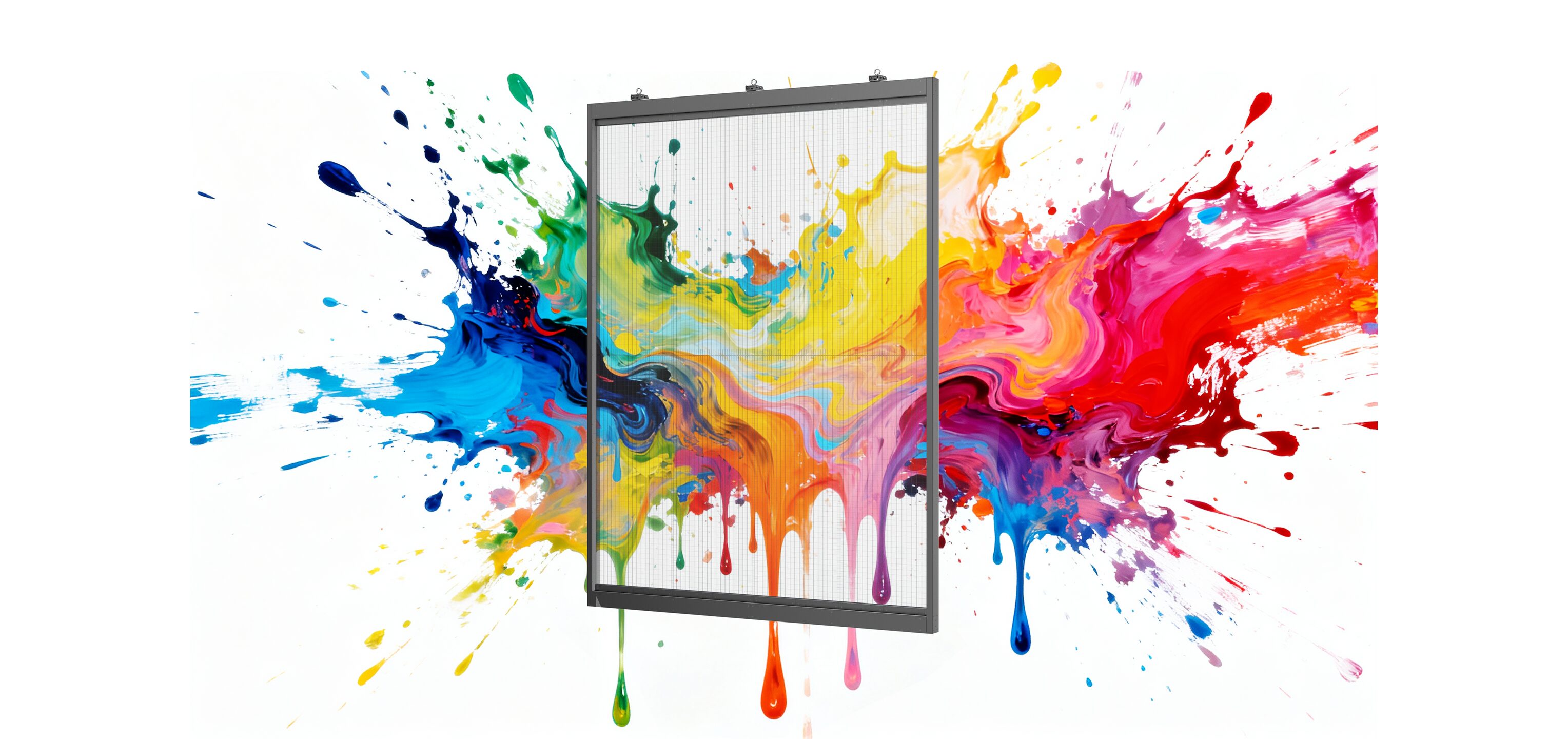
How Pitch Influences Image Sharpness
Image clarity relies on the close relationship between pixel pitch and viewing distance. A shorter distance requires a finer pitch, while a greater distance allows a coarser pitch. A simple rule is to multiply the pitch value by 1,000 to get the recommended observation distance.
- Fin pitch (P1.2–P2.0 mm) : Recommended for 1 to 3 meters. Ideal for luxury storefronts where the viewer is very close.
- Medium pitch (P2.5–P4 mm) : Suited for 3 to 6 meters in entrance halls or exhibition stands. Offers an excellent balance between image quality and cost.
- Coarse pitch (P4–P6 mm) : Ideal for 6 to 10 meters. Pixel density becomes imperceptible, making it perfect for standard projects.
Another rule of thumb: resolution is sufficient if the pitch (in mm) is less than the distance (in meters) multiplied by 1,000. This trick ensures comfortable viewing for spectators, which is crucial in public spaces.
Viewing Distance According to Pixel Pitch
Matching the pitch to the available space is essential to finalize your decision. A small room demands a fine pitch, while a large hall can get by with a coarser one. Each configuration requires precise study to optimize the render.
- 1 to 3 meters (Pitch P1.2–P2.0) : Perfect for confined areas and premium counters where perfect clarity is required.
- 3 to 6 meters (Pitch P2.5–P4) : Excellent for reception halls and conference rooms, offering the best price-quality ratio.
- 6 to 10 meters (Pitch P4–P6) : Suited for semi-outdoor installations where a wider pitch helps reduce costs.
Beyond a P6 mm pitch, these screens are generally reserved for very large outdoor installations, such as stadiums or airports. In those cases, viewing distance becomes far more important than pure resolution.
The screen size should also be determined by the space available. A good proportion would be, for example, a screen width of two meters for a room depth of three meters. This ratio ensures optimal visual comfort for the entire audience.
How to Choose Screen Size Based on Space
To understand how to choose screen size, evaluate the available space and the average spectator position. Plan a viewing distance equal to three or four times the height of the screen. This way, spectators can enjoy comfort without eye strain.
A small shop can easily accommodate an LED screen with a maximum width of two meters. The modular design of many screens allows for a custom purchase that respects architectural constraints. This flexibility guarantees a harmonious integration into any professional building.
Calculating LED Screen Size and Features
Determining the ideal dimensions for a professional LED screen involves analyzing several key factors: installation surface, planned viewing distance, and features of the content to display. This in-depth reflection is essential to make the best choice for your environment and specific architectural constraints.
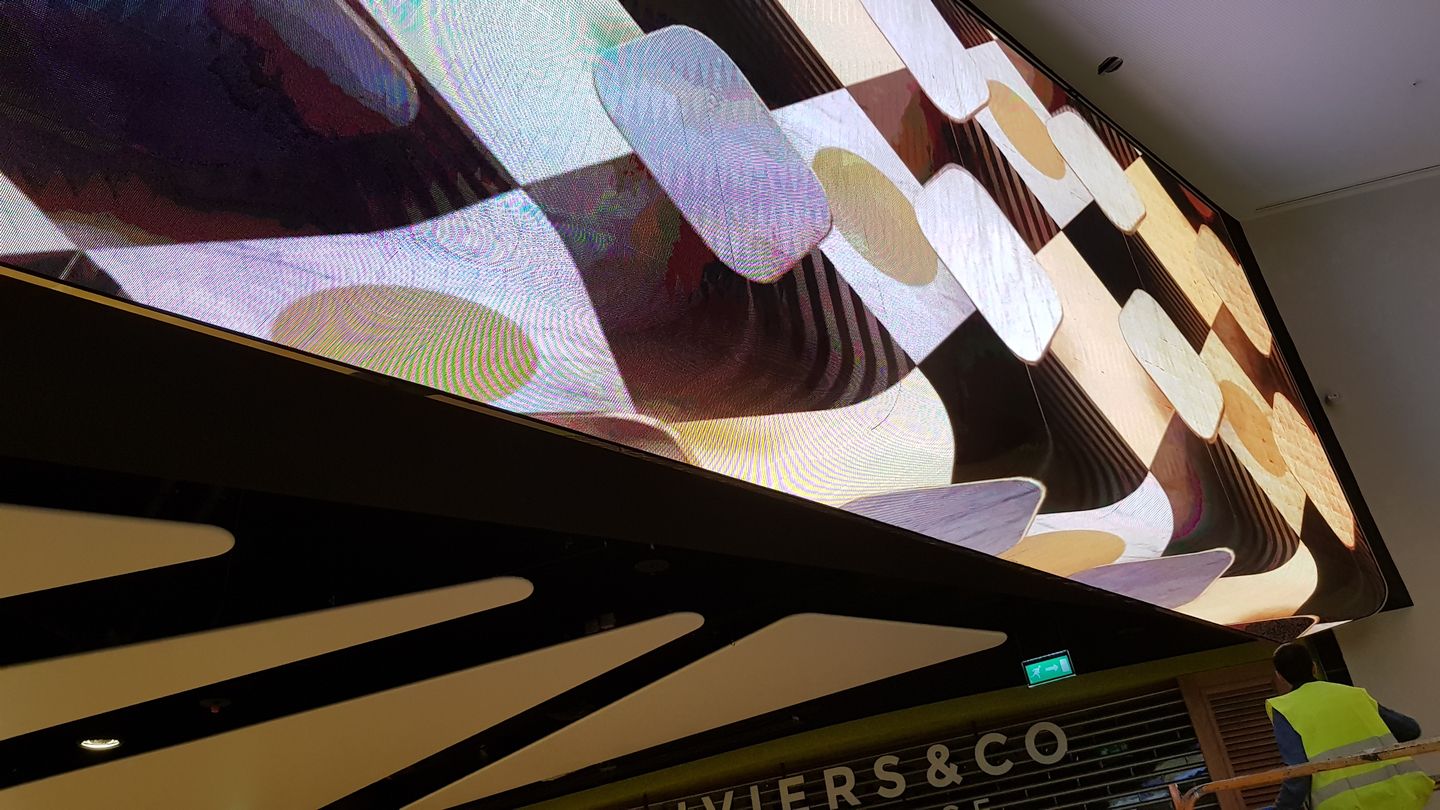
Sizing an LED Screen According to Available Surface
Before calculating the size of an LED screen, take time to precisely measure your available space and identify any visual obstacles. A useful practical rule: the width of your display should ideally represent about one-third of the distance to your viewers.
Standard modules offer great mounting flexibility. For large projects, wider formats significantly streamline deployment. If your space has an atypical shape, custom LED screens are the ideal solution for sizing an LED screen for a complex space.
| Space Surface | Min. Distance (m) | Recommended Pitch (mm) | Screen Size (m) |
| Small shop (20 m²) | 1.5–3 | P1.2–P2.0 | 0.5–1.5 |
| Reception hall (50 m²) | 3–5 | P2.5–P3.5 | 1.5–3 |
| Large meeting room (100 m²) | 5–8 | P4–P5 | 2–4 |
| Commercial facade (>200 m²) | 10+ | P5–P6 | 4–8 |
Resolution and Modularity for Custom Display
The final resolution of the image is directly linked to the number of assembled modules and the chosen pitch. Precise calculation of this pixel density is therefore crucial to optimize display quality based on viewing distance.
Modular design greatly simplifies on-site assembly. Its main advantage: it allows replacing a faulty panel quickly, without interrupting the overall system operation. This exceptional flexibility makes this equipment particularly attractive, whether for temporary installations or complex permanent projects.
Brightness, Technology, and Features of an LED Screen
Brightness, generally expressed in candelas per square meter (cd/m²) or nits, is decisive for the visual quality of your content. It combines with current LED display technologies to deliver optimal performance. Good brightness ensures your equipment will be perfectly suited to the specific technical constraints of the space.
What Brightness for Indoor or Outdoor Environments
The choice of screen size should always account for the ambient lighting of the location. For standard indoor use, a brightness between 800 and 1,200 nits ensures both efficiency and visual comfort. Outdoors, especially in direct sunlight, it may be necessary to go up to 8,000 nits to maintain perfectly clear visibility.
Transparent panel screens require fine management of the light they emit. High transparency lets exterior brightness through, but necessarily reduces the color contrast. For a storefront heavily exposed to sunlight, aim for a minimum brightness of 5,000 nits.
- Standard indoor (800–1,200 cd/m²) : Ideal for meeting rooms or certain closed public spaces, without excessive power consumption.
- Semi-outdoor (2,500–4,000 cd/m²) : Suited for covered storefronts, protected from splashes and dust.
- Outdoor full sun (5,000–8,000 cd/m²) : Necessary for outdoor installations exposed to the elements, requiring total waterproofing.
- High-brightness transparent (3,500–4,000 cd/m²) : Provides very clear readability while maintaining good visibility of the background decor.
A refresh rate of at least 3,000 Hz eliminates any visible flicker on camera. This is an essential feature for live-streamed events, offering optimal compatibility with modern capture equipment.
COB, SMD, Transparent or Opaque: What Technology to Choose
Two dominant technologies lead the market today: COB and SMD. COB technology is distinguished by its ideal contrast, while SMD offers remarkable brightness.
- COB (Chip-on-Board) : Delivers deep blacks and superior contrast, particularly suited for indoor use where high resolution is paramount.
- SMD (Surface-Mount Device) : Stands out for its high brightness and design flexibility, making it the preferred choice for outdoor installations.
- Opaque screens : Remain the optimal solution when the background is unimportant, guaranteeing rich and faithful image reproduction.
The choice between a transparent or opaque LED screen depends primarily on your expectations for architectural ambiance. LED screens are perfectly suited for modern storefronts that wish to maintain visibility of the environment inside or outside.
Your final choice often comes down to balancing budget constraints and design. To well choose an LED screen, take time to carefully evaluate your actual needs.
Refresh Rate, HDR, and Durability for a Reliable LED Screen
The integration of HDR professional screen format substantially enriches the content delivered. This technology brings a more intense palette of colors and advanced features for extremely faithful image reproduction. Verifying compatibility with different available formats allows you to fully take advantage of your professional LED screen.
The average lifespan of a modern LED screen commonly reaches 100,000 hours of continuous use. It is also recommended to verify the accessibility of front modules, facilitating any maintenance intervention without complete disassembly. These decisive criteria ensure you acquire a true good LED screen — both durable and easily repairable.
Frequently Asked Questions
What impact does pixel pitch have on the clarity and price of a professional LED screen?
Pixel pitch determines the clarity of the LED screen at close range and directly influences the overall price of your installation. A finer pitch means more diodes, which significantly increases the cost. Thus, a LED screen at P1.2 costs considerably more than an equivalent-size P4 model.
Choosing an extremely tight pitch is pointless if your audience is far away. To optimize your budget, simply multiply this measurement by 1,000 — it gives you the ideal viewing distance. You will then get a perfectly tailored installation for your specific visual needs.
How to adapt an LED screen to a very bright or outdoor space?
For a very bright space or outdoor use, a brightness between 5,000 and 8,000 cd/m² is absolutely essential. This guarantees excellent content readability even under strong sunlight or intense spotlights.
IP65 certification is also indispensable for protecting your LED screen from the elements, rain, and dust. Generally, SMD technology offers more power than COB, making it better suited to outdoor constraints. Finally, an active cooling system is recommended to prevent overheating and ensure long service life.
Should I choose a transparent or opaque LED screen for a storefront or facade?
The choice between a transparent or opaque LED screen depends primarily on your communication goals. If the background has visual or architectural interest, a transparent solution lets customers see products or the interior of the store. Conversely, the opaque screen generally offers better contrast and superior image quality for detailed video content.
For LED screens, mesh technology is ideal for lightweight facades and building structures. Glass-integrated modules fit perfectly onto glass surfaces, offering an excellent visual balance. Each type of transparent LED screen allows you to precisely enhance your space and beautify your communication.