
Evaluating the power consumption of a giant LED screen is a key step to anticipate operating costs and size your electrical infrastructure properly. This guide details real-world energy needs and provides precise per-area calculations for every type of project. It also walks you through effective strategies to cut your energy bills.
Power consumption of a giant LED screen per m²
LED screen power consumption varies considerably depending on the technology, the size, and the settings used. Under standard conditions, a display draws between 200 and 400 W/m², but this can spike to nearly 2,000 W/m² at maximum brightness. A reference value of 500 W/m² is commonly used for electrical sizing when the screen is rendering an all-white image.
How much power does a giant LED screen actually use?
In practice, the actual giant LED screen power consumption stays below the maximum values listed on spec sheets. During normal operation, the power drawn typically fluctuates between 120 W/m² and 200 W/m². Since the display almost never runs continuously at peak intensity, it is important to distinguish theoretical data from real-world usage.
For example, a 10 square-meter screen typically requires 2 to 4 kWh per hour of normal use. Over a 12-hour day, that amounts to 24 to 48 kWh. Over a year, estimated cost ranges from €1,314 to €2,628, including a 20% safety margin.
As noted in a government study on the digitalisation of sports venues, such sites often integrate large screens and high-density Wi-Fi networks. These installations, which enrich the spectator experience, have a significant impact on overall energy consumption. A Building Management System (BMS) therefore becomes essential to optimise energy use and control costs.
Worked examples by screen surface area
LED power consumption scales naturally with the total installed surface area. A 5 square-meter screen, for instance, draws roughly 0.67 kWh/h on average. Without any special settings, a 15 m² model can reach about 2.01 kWh/h.
- 5 m² screen : average consumption of 0.67 kWh/h, or 2,891 kWh/yr (cost: €434/yr at €0.15/kWh).
- 10 m² screen : consumption of 2 to 4 kWh/h standard, generating 8,760 to 17,520 kWh/yr (cost: €1,314 to €2,628/yr).
- 15 m² screen : about 2.01 kWh/h in normal operation, or 8,804 kWh/yr over 12 h/day (cost: €1,321/yr).
The content being displayed also has a noticeable impact on the daily power consumption of LED screens. A white background, which requires all diodes to light up simultaneously, demands maximum power. Power consumption therefore rises almost proportionally with the brightness level applied.
Brightness, pixel pitch, and factors that affect consumption
Brightness setting is the most influential factor on the energy needs of your display. Reducing brightness by 30% drops power consumption by roughly 25%. Outdoors, a minimum visibility of 5,000 nits is required, which explains why outdoor LED screen power consumption is so high.
The spacing between pixels, known as pixel pitch, also affects energy usage. A very fine pitch—characteristic of high-resolution screens—multiplies the number of components and thus the power needed. Calculating the optimal pitch relative to viewing distance is therefore crucial to limiting energy spend without compromising image quality.
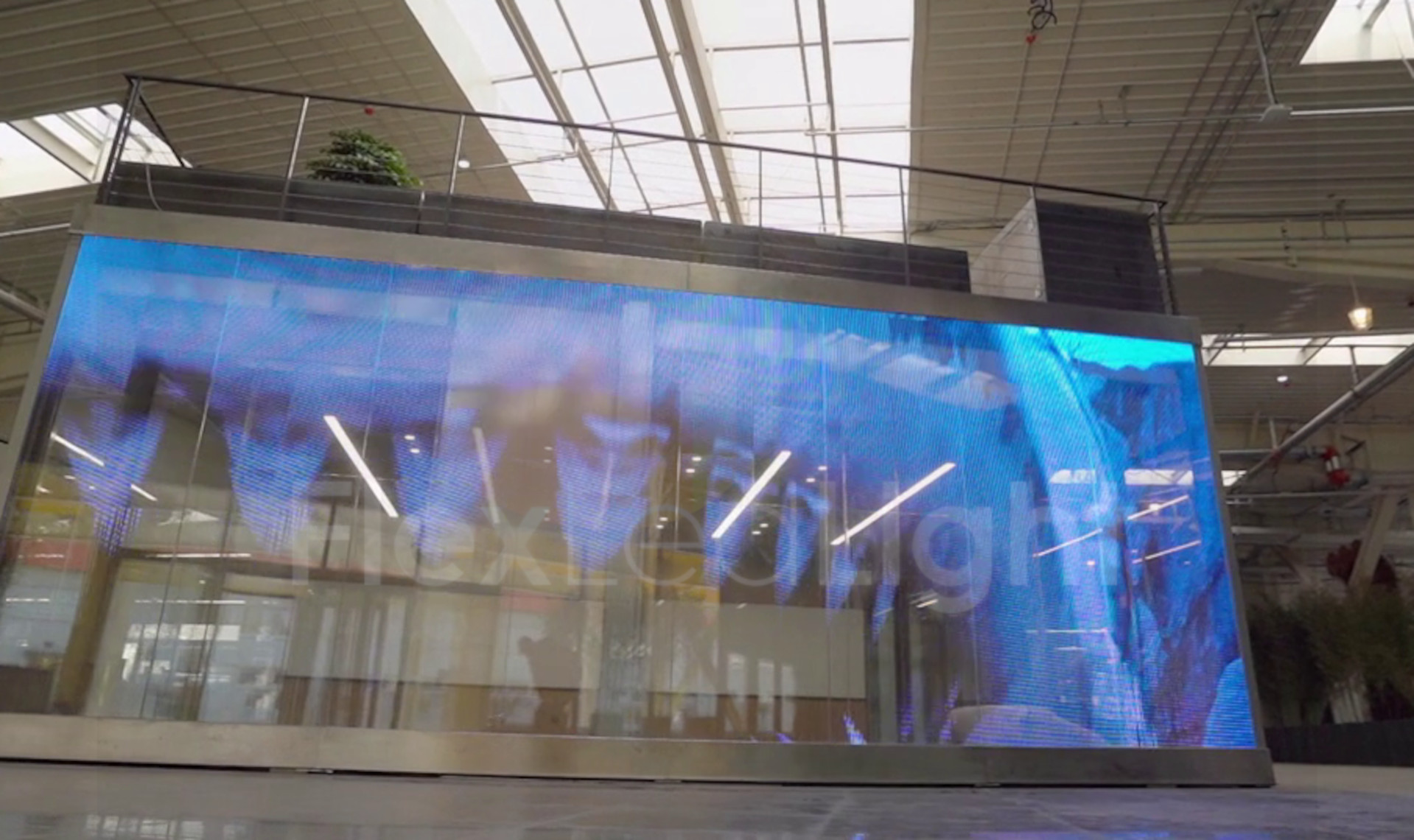
Transparent screens offer a power-efficient solution, with consumption up to 30% lower than traditional opaque models. Their needs sit between 150 and 800 W/m², versus 200 to 1,200 W/m² for standard screens. This makes them a relevant solution for shop windows, where dynamic display must coexist with energy sobriety.
Energy efficiency of giant LED screens
In terms of energy efficiency, giant LED screens significantly outperform other technologies on the market. Their advantage stems from an optimised architecture and superior luminous efficacy. Choosing LED technology is therefore a smart investment to substantially reduce the overall operating cost.
LED vs LCD: consumption and savings
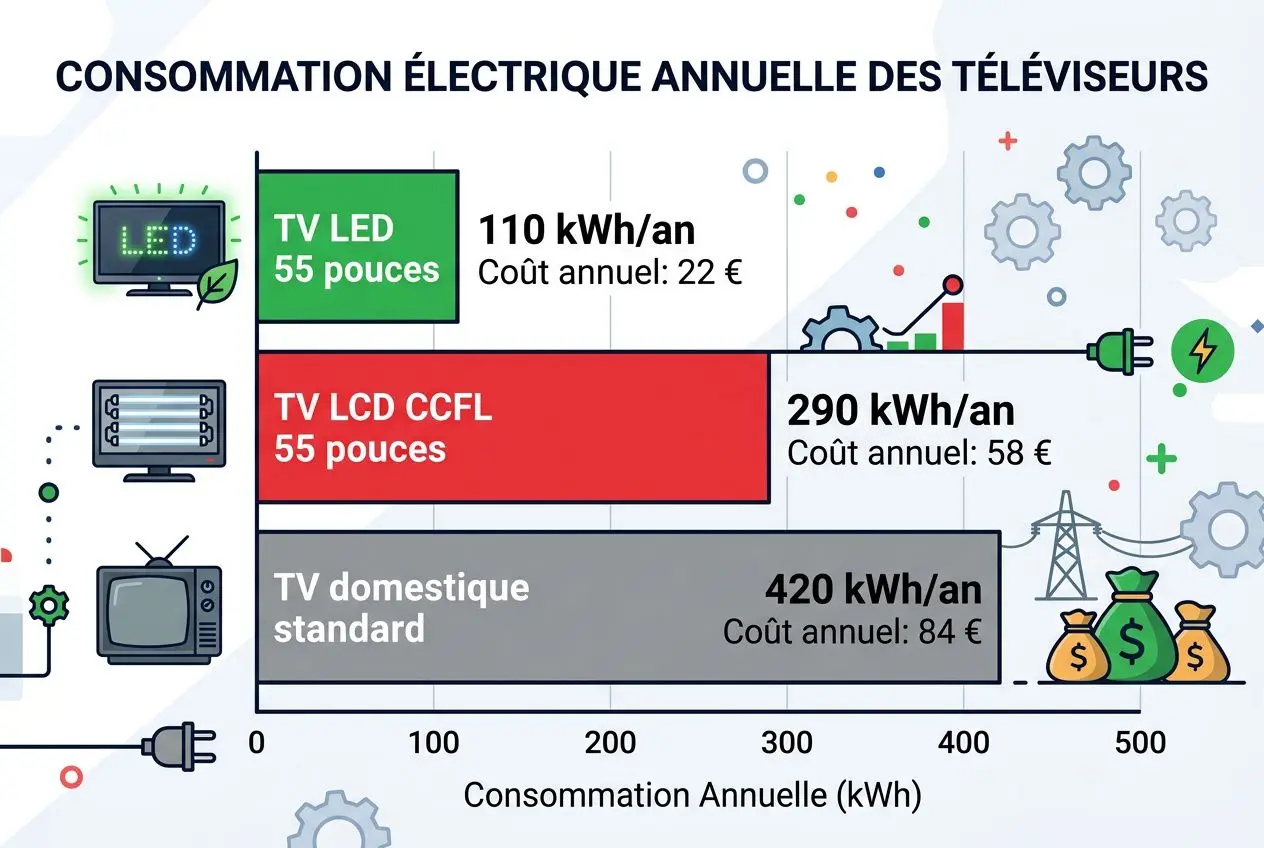
At equivalent brightness, LED screens consume notably less power than LCD panels. For a 2 m² surface, the power required is considerably lower with LED technology. This translates into a consumption reduction of about 438 kWh per year in continuous operation.
- Luminous efficacy : LED offers 40 to 50 lm/W versus 20 to 30 for LCD, nearly doubling its efficiency.
- Energy class : LED models often earn an A-/A+ rating from ADEME, demonstrating superior performance over LCDs.
- Financial impact : for a 10 square-meter outdoor screen used 8 hours a day, savings can reach nearly €9,000.
- Carbon footprint : reducing energy consumption lowers pollutant emissions—an asset for corporate environmental policies.
| Technology | 55 inches (W) | 12h/day consumption (kWh/yr) | Annual cost (€0.15/kWh) |
| LED | 80 W | 350 kWh | €53 |
| LCD CCFL | 120 W | 525 kWh | €79 |
| Difference | -40 W | -175 kWh | -€26 |
Real-world cases confirm this energy performance. A 55-inch 4K LED panel draws 95 W versus 130 W for an equivalent CCFL LCD. In continuous operation, the LED limits annual consumption to 701 kWh, significantly lowering operating costs.
Common Cathode: an architecture that changes everything
The Common Cathode system represents a major breakthrough for energy savings in LED displays. By regulating the voltage per colour channel, it generates less heat and cuts power consumption by 20 to 40%. This advantage flows directly to the electricity bill.
Take a 10 square-meter screen using this technology: its power draws 193 W/m² versus the typical 545 W/m². For 12 hours of daily use, the saving exceeds €1,500 per year. Over five years outdoors, the gains easily offset the initial investment.
The benefits of this solution go beyond energy reduction alone. It extends the screen’s lifespan and delivers intense brightness without increasing power. The most advanced models combine Common Cathode with premium LEDs to maximise efficiency.
Methods to reduce your energy bill
Several straightforward approaches can cut expenses without compromising the visual impact of the installation. Eco Mode, for example, lowers brightness and delivers energy savings of 10 to 20%. Adding light sensors automatically adjusts the display to ambient brightness.
Scheduling nightly shutdowns generates additional financial savings. Similarly, displaying darker-toned content significantly reduces consumption. Finally, disabling HDR mode saves a few extra percentage points of energy with no noticeable quality loss.
- Eco Mode : reduces consumption by 10 to 20%, ideal for lower-power screens.
- Light sensors : save up to 40% energy depending on sunlight, beneficial for storefronts.
- Schedule programming : nightly shutdown saves hundreds of euros annually.
- Visual content : balanced images reduce consumption by 15 to 20% compared to a white background.
On a 10 square-meter installation, combining these methods generates a total saving of €600 to €800 per year. These smart features typically pay back in less than two years. This is why public venues like stadiums integrate these features to better control their electricity consumption.
Sizing and anticipating giant LED screen consumption
Anticipating energy consumption is a crucial step before installing giant LED screens. Sizing your project correctly avoids unnecessary cost overruns related to electricity. It also lets you accurately evaluate the true total operating cost over multiple years.
Which consumes more: indoor or outdoor?
You often hear the question: do LEDs consume a lot of electricity? In absolute terms, a 5 square-meter screen typically uses between 500 and 1,500 watts. However, when normalised by surface area and brightness, LED technology demonstrates remarkable energy performance.
- Standard indoor model : budget for an average consumption of about 120 W/m² in spaces with moderate ambient lighting.
- Semi-direct outdoor model : expect 300 to 500 W/m² to guarantee excellent visibility even under intense natural brightness.
- Direct sunlight outdoor model : power can climb to 2,000 W/m² to ensure perfectly readable display in full sun.
- Transparent storefront version : with a consumption of 150 to 300 W/m², it uses about 30% less energy than opaque models.
For the same size, outdoor screens are far more energy-hungry due to their greater brightness requirements. This difference can generate very significant annual costs for large formats exposed to sunlight. Conversely, an indoor installation always proves more affordable over the long term.
How to calculate the annual operating cost of an LED screen?
To estimate your future expenses, a simple formula lets you determine annual kWh from power in watts. For giant LED screens, it is advisable to base calculations on real average consumption rather than peak theoretical values. For instance, a very powerful unit running 12 hours a day can accumulate over 8,700 kWh per year.
The bill amount is simply obtained by multiplying this energy consumption by your local electricity rate. By intelligently adjusting brightness settings, a noticeable bill reduction is perfectly achievable from year one. A simple recalibration after installation can generate substantial savings.
Our recommendations for a controlled LED project
Adopting best practices from project conception enables excellent control of energy consumption. It is essential to adapt screen dimensions to the planned viewing distance and fine-tune display settings. Finally, rigorous maintenance guarantees system efficiency and longevity.
- Pre-audit : simulate the entire project including usage hours, local rate, and chosen equipment specifications.
- Equipment choice : opt for premium LEDs; their higher initial cost will be quickly recouped through superior consumption performance during operation.
- Electrical installation : size wiring slightly above the estimated initial power to anticipate future upgrades.
- Clear agreements : establish firm consumption targets to hold each technical stakeholder accountable and ensure a reduction of waste.
Organisations managing multiple giant LED screens should absolutely request a detailed simulation from their professional installer. This initial guidance prevents unnecessary spending over the very long term. In the end, every watt saved per square metre contributes significantly to optimising the ROI of your investment.
Frequently asked questions
What is the power consumption of a 10 m² giant LED screen?
The power consumption of a 10 m² LED screen typically ranges between 2 and 4 kWh per hour. For standard use of 12 hours a day, that can reach up to 48 kWh daily. Over a year, the total energy cost is approximately €1,314 to €2,628.
Outdoor screens, which require high brightness, can consume up to 4,000 W. Indoors, the power consumption of an LED screen of equivalent size remains more moderate.
Which consumes more: an LED screen or an LCD screen?
At equal brightness, an LED screen consumes noticeably less energy than a standard LCD model. This better energy efficiency comes from its modern technology, which reduces the overall power consumption of the device.
As an example, a 120 W LED advertising panel versus about 170 W for an equivalent LCD screen. This difference helps significantly lower the electricity bill over the long term.
What is the real annual cost of a giant LED screen depending on pixel pitch and brightness?
Annual cost mainly depends on the size, resolution, and brightness of the screen. Reducing brightness by 30% directly cuts energy costs.
Adding smart sensors also helps optimise LED screen power consumption. Over ten years, the total savings more than justify the initial investment in higher-performance equipment.