Bespoke LED screen design perfectly addresses the specific needs of every commercial or events project. Combining creativity, design and technical engineering, our manufacturing unit transforms your vision into luminous reality. This process guarantees a custom LED screen perfectly adapted, whether for indoor use or for outdoor LED installations, all the way to final installation.
Custom LED Screen Design: Technologies and Free Forms
Your project development begins with a precise study of the installation site and viewing distances. The chosen pixel pitch directly defines the visual resolution of your equipment. This essential parameter influences both image clarity and the overall budget to plan.
Which LED Screen to Choose for Your Project
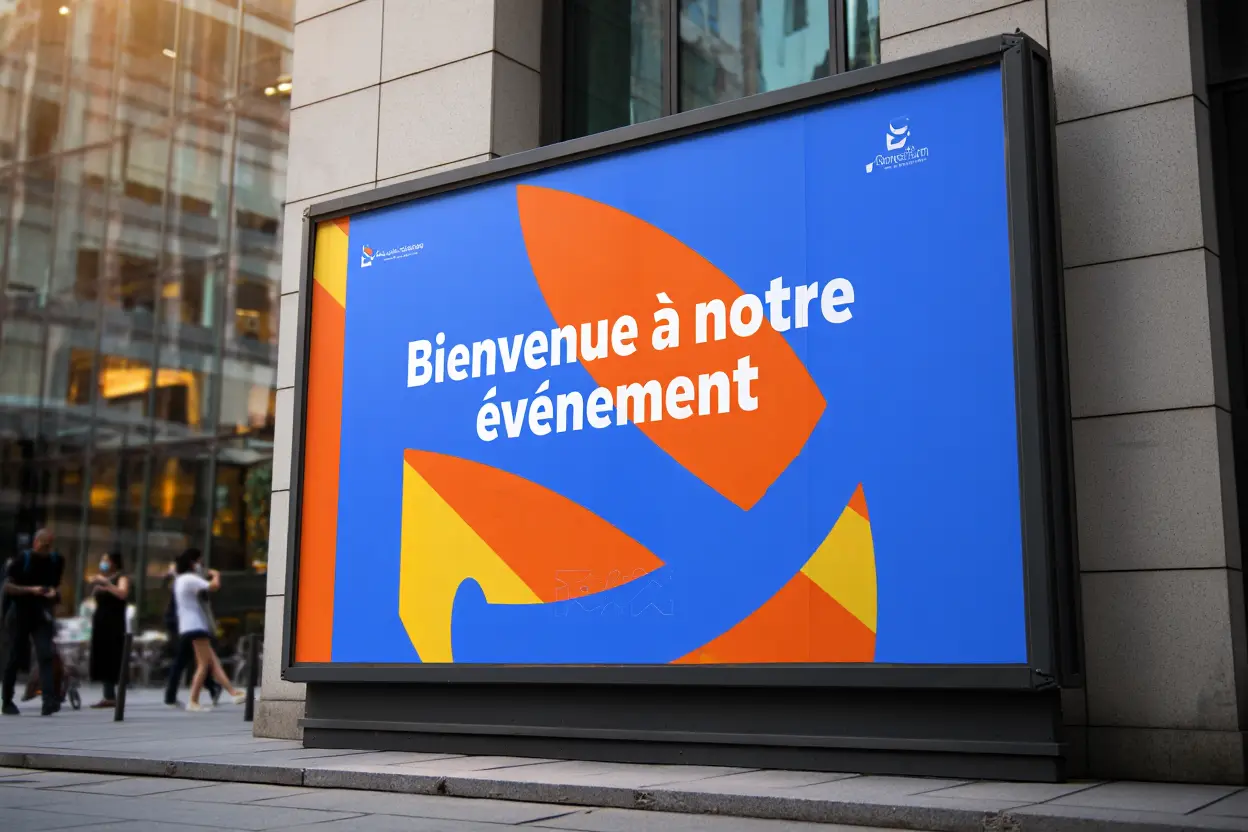
Your equipment choice depends primarily on available surface area, allocated budget, and your operating environment. FlexLedLight designs a custom LED screen specifically imagined to blend seamlessly into unusual spaces. For example, a transparent flexible LED screen can enhance glass facades while maintaining excellent brightness.
Transparent Flexible LED Screen for Innovative Architecture
These modern solutions harmoniously unite dynamic display and natural light preservation. They guarantee exceptional transparency while delivering the high brightness essential for prestigious venues. To understand the difference between OLED and LCD screens, keep in mind that LED technology offers incomparable durability for large formats.
- Optimal transparency: allows natural light through without compromising visual clarity.
- Mechanical flexibility: quick mounting and dismounting during professional events.
- Architectural integration: direct collaboration with designers for unique visual creations.
Glass panels integrate discreet components for perfect insertion into contemporary buildings. Meanwhile, lightweight aluminum grilles are ideal for large structures. This approach ensures impeccable aesthetics while optimizing transparency.
Difference Between LED, OLED, and LCD to Guide Your Choice
These three display systems are based on fundamentally different technical principles. Electroluminescent diodes produce their own light, guaranteeing a much longer lifespan. Unlike standard modules, this method stands out distinctly for demanding professional use.
For large formats, excellent weather resistance makes LED technology the logical choice. Outdoor LED screens indeed require very high luminous intensity to compete with sunlight. Conversely, the power needed for an indoor model remains more moderate.
But beyond brightness and splash-proof resistance, LED modules assemble into giant screens and/or special shapes, with no borders (unlike the bezels of TV screens). This is where the skills of FlexLedLight engineers take on their full dimensions to bring your imagination to life.
Transparent Storefront LED Screen and Visual Communication
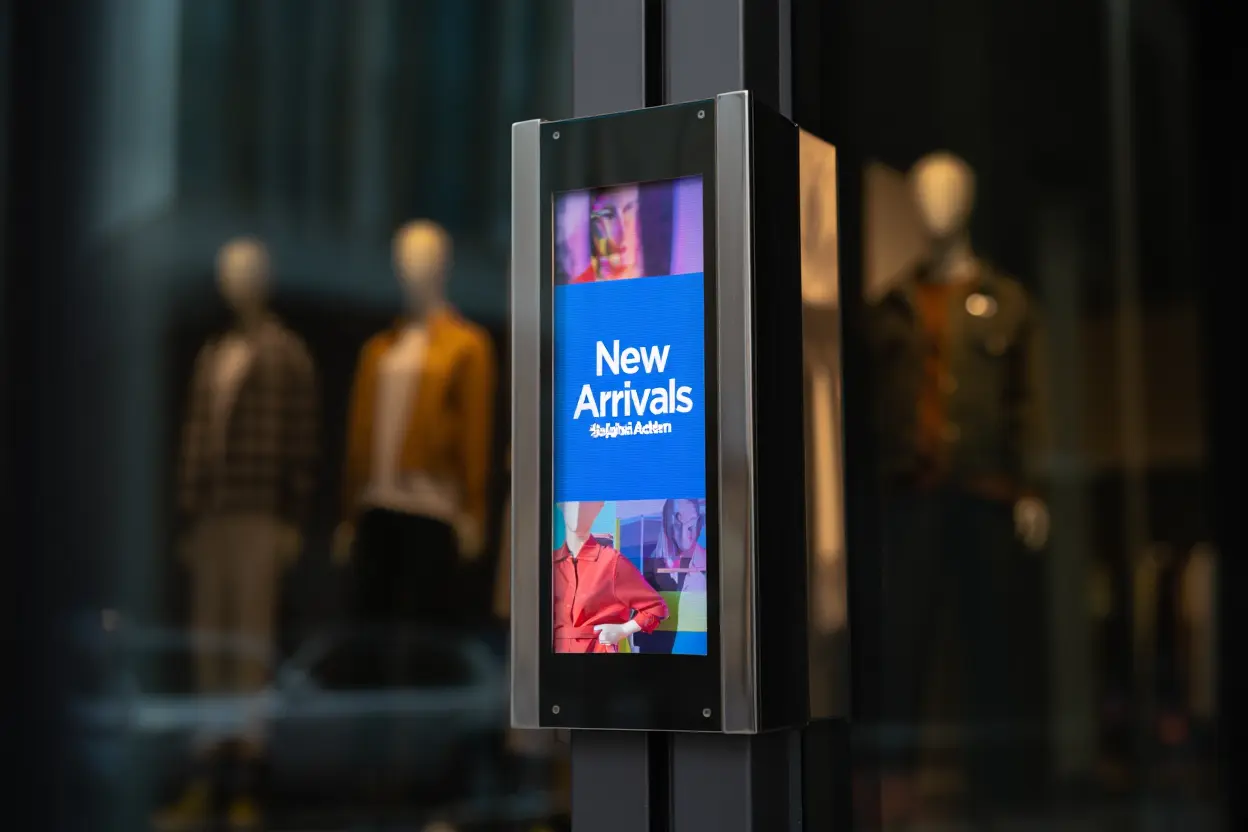
Dynamic storefronts reinvent the customer experience by cleverly blending promotions and product visibility. A transparent storefront LED screen allows displaying captivating videos while keeping the interior of the shop visible. This visual communication solution boosts commercial appeal without obstructing natural light.
Dynamic Storefront with Adhesive Transparent LED Screen
This innovation represents a major step forward for high-end retail. Existing storefronts can receive ultra-discreet films adding just a few millimeters of thickness. The adhesive transparent LED screen installs without major renovations, guaranteeing quick and efficient installation.
Interactive functionalities also enrich the experience of passersby. FlexLedLight offers LED screens with integrated touch options to capture lasting attention. Customers interact directly with the content, an innovation particularly appreciated in luxury boutiques.
Brightness often exceeds 5000 nits to ensure excellent visibility even in direct sunlight. This performance is essential for storefronts exposed directly to daylight. Shopping centers frequently use them to highlight the brands they house and to create an atmosphere in their aisles.
Transparent Solutions for Facades and Communication
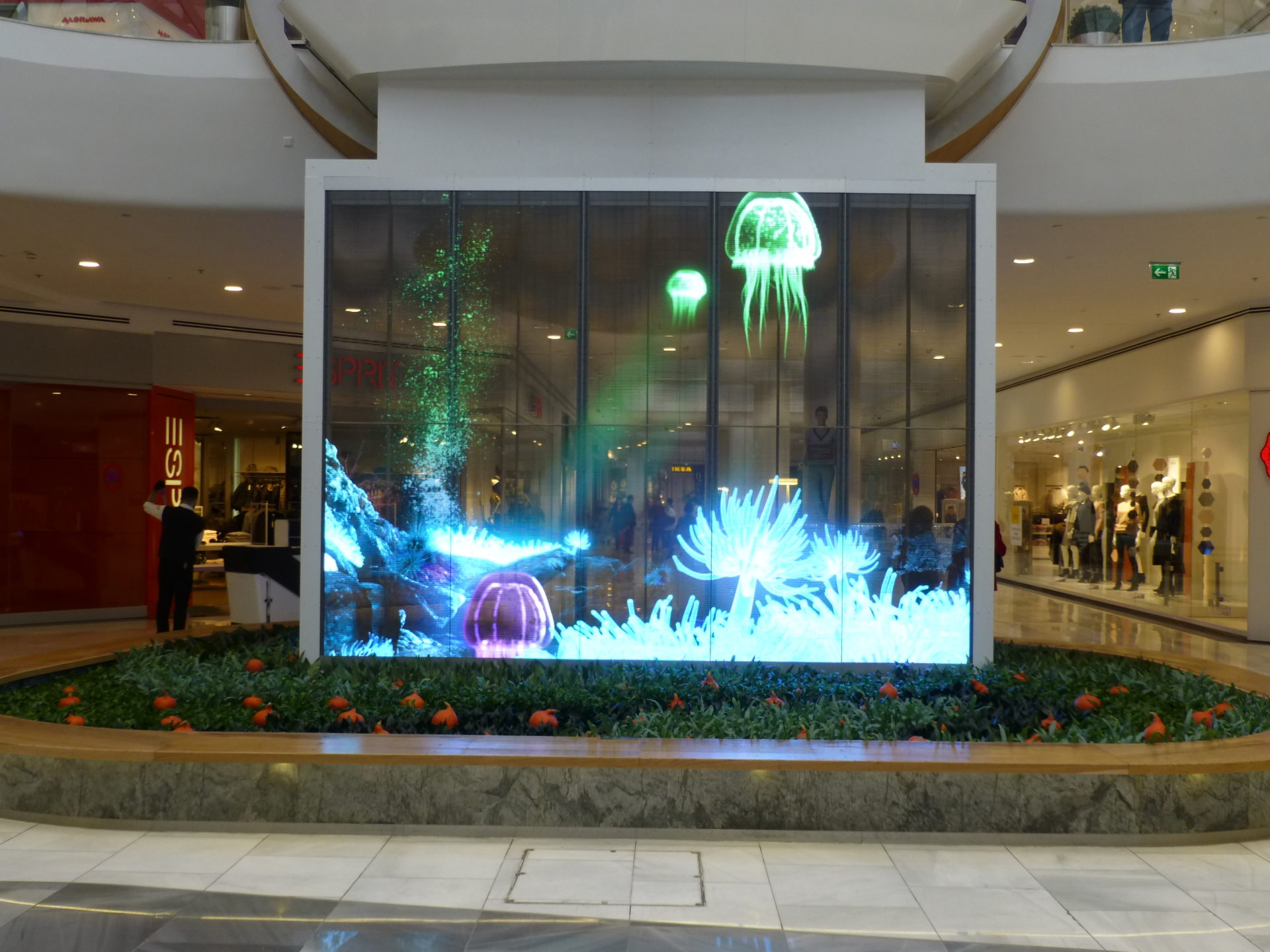
These panels intelligently transform commercial facades into dynamic displays while respecting original architecture. Their high transparency preserves natural clarity throughout the day. They remain perfectly visible and readable even under direct intense sunlight.
- Glass balustrade integration: multi-format video diffusion to animate different levels of a commercial or outdoor space.
- Architectural transparency: preservation of natural light while respecting facade aesthetics.
- Scheduled synchronization: centralized management via CMS designed for distributed screen networks.
These architectural solutions integrate perfectly into the most prestigious interior design projects. The balustrade LED screen model represents a key innovation for effectively modernizing premium spaces. Synchronized programming of multiple advertising displays is easily managed via cloud and the software mastered by FlexLedLight.
The innovative Mesh and Minisign transparent screens ranges perfectly complement this technological offering. These flexible solutions adapt easily to unusual architectures and various rapid event installations.
Brightness, Performance, and LED Technological Differences
Brightness choice is critical depending on the installation environment. For indoor use, brightness of 800 to 1200 nits is generally sufficient, whereas for an outdoor LED screen, especially exposed to direct sunlight, at least 5000 nits are needed to ensure good visibility. FlexLedLight designs every custom LED screen with high brightness adapted for outdoor use. Resolution is also adjusted according to your specific needs, to offer an optimal output dedicated to visual communication.
LED, OLED, and QLED: What’s the Difference for Your Giant LED Screen?
Technology choice is crucial for defining your giant screen. But what is the difference between LED, OLED, and QLED? LED screens offer robust luminous power particularly suited to outdoor environments, while OLED technology excels in deep black reproduction. For a professional giant LED screen, LED technology significantly outperforms in weather resistance and demanding outdoor conditions. It also enables building bezel-less screens of custom size and shape.
Thermal management is paramount to maximize your LED screen lifespan. Energy not converted into light inevitably becomes heat. To counter this, high-performance ventilation systems are integrated from the design of modules exposed to intense heat (Middle East). In more temperate climates, or in climate-controlled spaces, fanless power supplies deliver satisfaction.
| Technology | Max Brightness | Lifespan | Contrast | Cost |
| LED | 5000+ nits outdoor | 50,000–60,000 h | Medium | Moderate |
| OLED | 800‑1200 nits | 30,000–40,000 h | Excellent | Very High |
| QLED/LCD | 1000–2000 nits | 40,000–50,000 h | Good | Moderate-High |
Using technologies such as common cathode can significantly reduce power consumption, up to 75%. This advantage becomes crucial for very large visual installations. Additionally, integrated sensors can automatically adjust brightness based on ambient light.
Optimizing Brightness for Indoor or Outdoor Use
LED screen brightness must be precisely adapted to its deployment environment. A refresh rate of at least 60 Hz is recommended to guarantee smooth video playback. This notably avoids unpleasant flickering or moire effects, especially when captured by a smartphone.
- Indoor environment: brightness of 800 to 1200 nits is generally sufficient to optimize visual comfort while managing energy consumption.
- Outdoor full-day environment: a minimum brightness of 5000 nits is required, accompanied by an IP65 protection rating to withstand weather conditions.
- 140 deg viewing angle: this wide opening ensures perfect readability from virtually all angles in large public spaces.
Color temperature and Color Rendering Index (CRI) are critical parameters to define based on usage. A luxury showroom demands impeccable chromatic fidelity to showcase displayed products. Conversely, an outdoor display prioritizes maximum luminous power for visibility.
High pixel density panels require integrated high-performance ventilation to prevent equipment overheating. Color accuracy depends heavily on the quality of materials and initial manufacturing processes. Finally, rigorous factory calibration guarantees perfect visual uniformity across your entire installation.
Installation, Price, and Support for a Giant LED Screen
Creating and installing a giant LED screen requires rigorous strategic planning, from initial brief to final assembly. A dedicated project manager accompanies you to guarantee deadline compliance, quality manufacturing, and installation conformity. Our custom LED expertise with every custom LED screen integrates eco-design, installation, and maintenance.
Price and Deadlines for a Custom Giant Screen
For a giant LED screen, the price and quote vary according to surface area, pixel pitch, and chosen technology. A free online quote precisely details the budget and projected timeline of your giant screen project. Plan approximately eight weeks, from initial brief to factory tests and final assembly.
- Free quote: details costs, timeline, and technical sizing of your project.
- Eight-week turnaround: a committed timeline from order to installation thanks to our efficient organization.
- Pre-assembly and testing: quality assured for quick and reliable on-site deployment.
Software configuration and color calibration are systematically included. Our optimized industrial organization ensures strict calendar compliance by our certified teams. Additionally, our modular design facilitates transport of unusual dimensions to specific locations.
Outdoor LED: Technical Requirements and Compliance
An outdoor LED screen installation requires IP65 protection, high brightness, and robust materials. Our outdoor LED equipment uses IP66 enclosures to withstand rain and extreme temperatures. Thus, our outdoor LED screens withstand all weather conditions thanks to perfect waterproofing and effective thermal management.
- IP66 certified enclosures: total protection against heavy rain and temperature variations.
- Durable materials: high resistance to UV, humidity, and salt depending on location.
- Compliance and safety: CE standard compliance guarantees optimal electrical safety.
It is essential to respect electrical safety standards and obtain municipal authorization. On public roads, it is often necessary to limit LED screen brightness to reduce light pollution. Finally, segmented module power supply reduces energy losses and significantly simplifies maintenance.
Support, Maintenance, and Content Management Post-Installation
Our after-sales service includes annual maintenance and 24/7 technical support. On-site training helps you master the management software and optimize energy consumption. The integrated tool allows smooth programming and perfectly synchronized dynamic display.
Remote control enables managing multiple screens simultaneously from a single server. This functionality is essential for vast urban networks or large shopping centers. The included software configuration ensures optimal commissioning, compatible with your existing systems.
Frequently Asked Questions
What is the price of a custom giant LED screen?
The price of a giant LED screen can vary considerably depending on its dimensions, resolution, and technology used. FlexLedLight offers a precise estimate including costs and installation schedule.
Note that an indoor LED screen does not carry the same costs as an outdoor screen designed to withstand climate conditions. Our final quote systematically covers all aspects: manufacturing, assembly, and configuration of your equipment.
What is the difference between indoor and outdoor LED screens?
An LED screen designed for indoor use requires moderate brightness but achieves very high image quality. Conversely, an outdoor LED requires high light output and robust weather protection.
Outdoor modules require advanced engineering to ensure perfect safety, both electrical and thermal. These screens undergo rigorous factory testing before being installed by our specialized teams.
What is the turnaround time to design and install a custom LED screen?
Plan approximately eight weeks to successfully complete a custom LED screen project. This timeline includes needs analysis, 3D design, and assembly of the giant LED screen or specialized display.
Subsequent phases involve logistics, final verifications, and on-site color calibration. For the largest projects, priority management is assigned with a dedicated project manager.