
LED screens transform professional display by combining exceptional brightness, low energy consumption, and a revolutionary modular structure. This article provides a comprehensive overview of the advantages and disadvantages of LED screens, comparing them to LCD and OLED displays, to help you make the right choice. You will understand why these large screens and very bright displays are now found in storefronts, facades, and commercial spaces today.
Key Advantages and Disadvantages of LED Screens
Choosing a new display device requires carefully weighing the advantages and disadvantages. LED screens offer brightness that can reach 5,000 to 10,000 cd/m², ensuring perfect visibility even in direct sunlight. These LED panels also consume 30% to 50% less energy than traditional LCD screens, while displaying a lifespan of 80,000 to 100,000 hours, far superior to other technologies.
However, the initial investment remains substantial, and the quality of deep blacks remains inferior to OLED, which constitutes one of the main disadvantages of LED screens. To dig deeper, check out our detailed analysis of LED screen advantages.
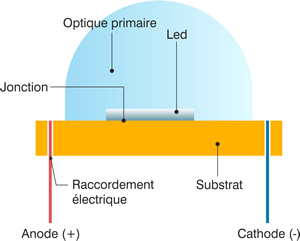
Brightness, Contrast and Image Quality
The brightness of an LED screen far exceeds that of standard LCD screens, going from 250–500 cd/m² to over 5,000 cd/m². This power enables remarkable visual impact, even in very bright areas or outdoors. The Full-Array system with local dimming increases contrast up to 3,000:1, which improves image quality and sharpens details in shadow areas.
- Full-Array with local dimming: Each zone of light-emitting diodes is controlled separately, reducing halos and reinforcing the depth of deep blacks.
- Edge-Lit LED: Light-emitting diodes positioned on the edges allow for thinner screens, but brightness distribution is less uniform.
- Viewing angles: With an amplitude of 140° to 160° (horizontal and vertical), the image maintains its stability, whereas some LCD screens lose quality below 120°.
A 55-inch LED television, equipped with 4,000 to 6,000 light-emitting diodes, renders vibrant colors and fluid video. While OLED deep blacks remain unmatched, recent advances in LED panels continue to narrow the gap.
Energy Efficiency and Lifespan
For a surface of 2 m², the energy consumption of an LED screen ranges between 120 and 170 W – up to 50% less than an equivalent LCD. This low consumption saves approximately 438 kWh per year, reducing electricity bills and cooling requirements. Less heat generated also means an extended lifespan for components, reducing maintenance visits.
The declared lifespan reaches 80,000 to 100,000 hours, compared to 30,000–60,000 hours for screens equipped with CCFL tubes. Moreover, the modular design allows quick replacement of a single element without dismantling the entire setup, minimizing downtime and costs.
Modularity, Cost and Purchase Limitations
Built from independent blocks, large LED screens freely adapt to the most unusual formats, whether covering a complete facade or creating an event installation. This modular architecture simplifies transport, installation on curved surfaces, and future repairs, enhancing overall flexibility. Users thus benefit from an evolving solution for all display needs.
However, the initial cost remains higher than that of basic LCD screens, especially for large custom sizes. Voltage variations can also cause temporary changes in contrast and brightness, altering visual impact. Finally, even though their performance is remarkable, LED screens do not yet match the perfection of deep blacks and image quality of OLEDs – a crucial point to consider before purchasing.
Transparent vs. Opaque LED Screen: Which to Choose
The choice between a transparent and an opaque LED screen depends on the type of display desired. The transparent model, with an ultra-fine mesh structure, lets between 70% and 95% of ambient light pass through and weighs only 1 to 5 kg/m². In contrast, the opaque LED screen offers maximum outdoor contrast, exceeds 15 to 35 kg/m², and requires a robust aluminum frame.
Transparency, Weight and Ease of Installation
A transparent LED screen transforms a storefront into a « magic window », since its fine mesh preserves visibility of products while remaining very bright. The pitch (distance between pixels) directly affects resolution and transparency rate: a 4 mm pitch offers about 65% transparency, while 6 mm reaches 80%. An 8 mm pitch allows 90% transparency, but reduces image definition. Installing 10 m² of transparent modules rarely takes more than two days, versus three to four days for an opaque LED screen, reducing labor costs and limiting business disruption.
Thanks to their flexibility, transparent LED screens adapt to curved or undulating surfaces, offering creative freedom impossible with rigid LCD screens. The device integrates discreetly into storefronts, museums, or lobbies while delivering bright, dynamic display, perfectly readable even in daylight and respectful of existing architecture.
| Characteristic | Transparent LED Screen | Opaque LED Screen |
| Brightness | 3,000–5,500 cd/m² | Over 10,000 cd/m² |
| Contrast | Approx. 5,000:1 | Over 10,000:1 |
| Weight | 5–10 kg/m² | 20–35 kg/m² |
| Thickness | 5–10 mm | 30–50 mm |
| Transparency | 70–95% | 0% (opaque) |
| Installation time | 2 days | 3–4 days |
| Optimal use | Indoor storefronts | Outdoor facades |
Brightness and Contrast by Environment
The opaque LED screen delivers over 10,000 cd/m² and contrast exceeding 10,000:1, guaranteeing clear display even on large outdoor screens in direct sunlight. This performance remains out of reach for LCD screens, limited to 250–500 cd/m², which quickly become unreadable under strong light. The opaque screen is therefore the reference for facades, train stations, or road signs where visibility must be optimal.
For an indoor storefront with moderate lighting, a LED screen producing between 3,000 and 5,500 cd/m² suffices, while offering reduced energy consumption. Indoors, in a controlled environment, LCD screens or OLED technology, known for their wide viewing angles and lower cost, can sometimes constitute an effective alternative.
Consumption and Commercial Advantages
The energy consumption of a transparent LED screen ranges from 150 to 800 W/m², about 30% less than an equivalent opaque LED screen. Over continuous operation, this difference represents over 200€ in annual savings and significantly reduces the carbon footprint over ten years.
Since it does not obscure the shop interior, the transparent LED screen catches pedestrians’ attention, enlivens the storefront, and increases foot traffic. Broadcasting personalized promotions, available 24/7, strengthens the brand’s omnichannel consistency and improves customer engagement, while managing energy costs.
LED Screen in Glass: Innovation for Storefronts
LED screens integrated into glass combine remarkable elegance, high transparency, and sophisticated LED technology. They thus offer a revolutionary display solution ideal for high-end storefronts and demanding commercial spaces. Thanks to clever design, they maintain 70 to 72% transparency while broadcasting extremely bright content, perfectly readable even in direct sunlight. FlexLedLight offers transparent LED screens specifically designed for these premium integrations and also showcases transparent LED screens already deployed by major groups.
Transparency, Mesh and Image Quality
A glass-integrated LED screen operates on a mesh whose pitch generally varies between 3.4 mm and 6 mm. A finer pitch (3.4 mm) allows higher resolution and better image quality, but at the expense of transparency. By maintaining 70 to 72% transparency, the storefront remains visible, allowing products to be displayed while overlaying captivating light animations. This LED technology also guarantees rich colors, constant brightness, and wide viewing angles for continuous visual impact.
- 3.9 mm mesh: Offers the highest resolution and excellent detail fineness, perfect for precise text, but with slightly reduced transparency.
- 4.6 mm mesh: Prioritizes transparency, ideal for displaying prices and keeping merchandise fully visible.
- Flexible pitch: Allows custom cutting to adapt to curved glazing, arches, or original architectural shapes.
- Viewing angles of 140° to 160°: Ensure uniform image quality and excellent visibility from any spectator angle.
Compared to traditional LCD screens, the transparent LED screen distinguishes itself with brilliant wow effect, sun-performing brightness, and a lifespan exceeding 80,000 hours, which significantly reduces the total cost of ownership over the long term.
Content Management and Environmental Impact
Content management can be done remotely, allowing great marketing flexibility while reducing operational costs. Among the many advantages and disadvantages of LED screens, the main asset remains their undeniable visual elegance. Conversely, the main disadvantage often lies in the initial purchase price. Their low energy consumption – about 30% less than an LCD screen – also represents a major asset in retailers’ CSR policies.
The LED backlight system generates less heat, reducing air conditioning needs and extending the lifespan of components. This low consumption, combined with the ability for permanent software updates, perfectly aligns commercial objectives with modern ecological imperatives.
Costs, Constraints and Customer Experience
The cost of a custom installation, for example for a 5 m by 2 m screen, can be two to three times higher than that of a standard LED screen. However, energy savings realized over time help offset this higher initial price. These screens remain sensitive to electrical voltage fluctuations; using a stabilized power supply is therefore recommended to avoid any drop in brightness and preserve display quality.
- Specialized maintenance: Cleaning and LED replacement must be entrusted to experienced technicians to avoid damaging the glass surface.
- Precise installation: Glass must be specifically machined to receive LED modules without compromising its structural integrity.
- Brightness adjustment: A very bright screen may require dimming in weakly lit areas for better visual comfort.
- Sometimes limited resolution: The mesh presence can affect the sharpness of highly detailed images compared to high-definition LCD screens.
Despite these disadvantages of LED screens, an animated storefront considerably attracts attention, strengthens brand image, and generates tangible and measurable customer engagement.
Frequently Asked Questions
What are the main advantages and disadvantages of LED screens?
Regarding the advantages and disadvantages of LED screens, the primary benefits include very brightness (between 5,000 and 10,000 cd/m²), ensuring display perfectly readable even in direct sunlight. Its modular nature allows each individual piece to be replaced, reducing downtime and maintenance labor costs. Additionally, thanks to their low energy consumption, these LED screens allow saving between 30% and 50% on bills compared to LCD screens, and offer an average lifespan of 80,000 to 100,000 hours.
Among the disadvantages of LED screens, the main points are a primarily higher initial cost than LCD screens, particularly for high resolution models. Blacks also remain less deep than with OLED, and usage requires a stable power supply as well as specialized maintenance. Finally, for large custom formats, the price can be two to three times higher than a standard module, increasing the overall project budget.
What is the best choice between LED and LCD screen for a commercial storefront?
For a very exposed outdoor storefront, an opaque LED screen is ideal thanks to its brightness that can exceed 10,000 cd/m² and a contrast exceeding 10,000:1. It guarantees excellent display in all conditions, even if its energy consumption is higher than a transparent LED screen. Its robustness and constant image quality generally justify this additional cost.
Indoors, a transparent LED screen offers a lightweight, modular solution with low consumption; it delivers brightness of 3,000 to 5,500 cd/m² while allowing products in the background to be seen. Its quick installation, reduced weight, and energy savings attract merchants attentive to their budget and aesthetics. In a shop where lighting is perfectly controlled, LCD screens can remain an option, but their limited resolution and contrast can harm the quality of dynamic display.
How much does an LED screen cost and what are the real long-term savings?
The price of a transparent LED screen with a surface of 2 m² generally ranges between 2,000€ and 5,000€, depending on pitch, resolution, and brightness. An opaque LED screen of the same size typically costs between 5,000€ and 12,000€, while a custom model can exceed 15,000€. These amounts represent the initial cost to factor into the ROI analysis.
Low energy consumption is the main leverage for savings: from 150 to 800 W/m² for a transparent LED screen, versus 2,000 to 3,500 W/m² for an opaque model. Over a ten-year period, this difference – added to the long lifespan and punctual module replacements – often allows recouping the investment in three to five years for a display operating 24/7. Thus, companies benefit from a concrete return on investment while reducing their energy footprint.