
Pitch, brightness, formats, power consumption, and safety standards: this 2026 comparative guide covers the key criteria for choosing a large LED screen for indoor and outdoor use, whether for an event, commercial, or permanent installation.
Large LED screens indoor and outdoor: definition and key differences
A large LED screen is built on a modular structure. Panels assemble to create a display surface with virtually no size limit, clearly distinguishing a LED screen from LCD or OLED solutions, which are often limited to fixed formats around 100 inches. This flexibility transforms the project from the design phase: the display adapts to the space, not the other way around.
In this context, regulatory aspects matter as much as the technology itself. For reference, the Wikipedia page on large LED screens lists, among others, nighttime brightness thresholds and mandatory shutdown requirements.
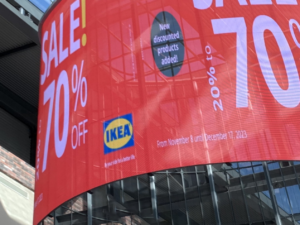
How does a large LED screen work?
The principle is straightforward: a large indoor/outdoor LED screen is made of modules, each formed by a matrix of light-emitting diodes. Each pixel combines three light sources—red, green, and blue—to produce the image. The perceived sharpness depends directly on pixel density, and therefore on the panel structure itself.
- DIP technology: three separate diodes per pixel, with strong mechanical resistance and high brightness, especially used outdoors.
- SMD technology: a single surface-mounted component, appreciated for its wide viewing angle, color precision, and uniform rendering, especially indoors.
- COB/MIP technology: chip directly integrated on the board, suited for very fine pitches from 0.9 mm to 1.8 mm, with high contrast, ideal when light is part of the design.
Once the modules are cabled, content control is handled via a Cloud CMS: scheduled programming, real-time updates, and remote management of multiple sites have become standard features in real installations. This software layer becomes critical as the screen enters daily operation, with rotating messages, synchronized campaigns, or content adapted to business hours.
In terms of operational lifespan, a LED indoor system typically reaches 80,000 to 110,000 hours, while a consumer TV sits between 15,000 and 30,000 hours.
Indoor vs. outdoor: distinct technical criteria
Resolution matters, but the installation environment imposes its own requirements: lighting adapted to the context, protection against the elements, and thermal cycling resistance.
- Indoor brightness: 800 to 1,500 nits in standard use, with versions reaching up to 5,500 nits in storefronts or atriums heavily exposed to natural light.
- Outdoor brightness: minimum 5,000 to 6,000 nits to remain readable in full sun, with some models reaching up to 10,000 cd/m² on heavily exposed facades.
- IP protection rating: IP65 minimum outdoors, IP66 or IP67 when climate conditions are more severe.
- Thermal resistance: an outdoor screen must withstand freeze-thaw cycles and heat without module deformation or color shift.
Once a site receives direct light, brightness reserve becomes decisive. Conversely, indoors, excessive brightness fatigues reading and degrades perceived contrast. The rendering depends on the real installation environment.
Standard formats already cover a broad spectrum: 110 inches (2,440 × 1,370 mm), 138 inches (3,050 × 1,710 mm), 165 inches (3,660 × 2,050 mm), and 220 inches (4,880 × 2,740 mm) in 16:9. Once installation is finalized, an LED screen holds a clear advantage over LCD with visible bezels: it can also adopt curved, concave, convex, or ribbon shapes. The difference lies in integration.
LED screen resolution: the role of pitch
Pitch corresponds to the distance, in millimeters, between two adjacent pixels. The lower this value, the higher the pixel density, and the sharper the image at close range.
A simple rule of thumb aids sizing: the pitch in millimeters roughly equals the minimum comfortable viewing distance in meters. A P2.5 screen offers clean reading from about 2.5 meters. What the eye retains is the balance between viewing distance, display surface, and image sharpness.
Choosing resolution and pitch for a large LED screen
Pitch sets much of the visual result, and also the budget of a large screen. If it is too wide for the viewing distance, text loses sharpness and detailed visuals quickly show their limits. Conversely, an overly fine pitch on a LED screen viewed from afar increases cost and power consumption with no visible gain. The difference lies in integration: real distance, content type, and expected quality level.
Pitch and viewing distance: the practical guide
For a high-definition LED screen indoors, COB or SMD technologies in P1.8 to P2.5 are recommended when the audience is less than 4 meters away. In this usage, what the eye retains is text sharpness, gradient continuity, and overall image quality. For an indoor screen viewed from very close, MINI LED COB panels in pitch 0.9 mm to 1.8 mm suit the most demanding applications.
When the distance exceeds 15 to 20 meters outdoors, P6 to P10 pitches remain reasonable on a large LED screen. Rendering depends on the actual reading distance: at this scale, increasing pixel density brings no perceptible improvement, while module costs rise significantly.
| Viewing distance | Recommended pitch | Typical use |
| 0.5 – 1 m | P1.5 maximum | Interactive kiosk, close storefront |
| 1 – 2 m | P1.5 to P1.9 | Indoor meeting room screen |
| 2 – 4 m | P1.9 to P2.6 | Reception hall, commercial space |
| 4 m and above | P2.6 to P4.8 | Event stage, auditorium |
| 10 m and above | P6 to P10 | Outdoor facade, stadium, urban display |
Display surface sizing follows the same logic. For a 50-person room with about 4 meters of viewing distance, a 350 × 200 cm format offers good reading comfort. Beyond 8 meters, a 700 × 400 cm format becomes more appropriate to preserve readability for the entire audience.
High-definition LED: when to choose it
LED display in high resolution makes full sense in three cases: an audience placed less than 3 meters away, content rich in fine text or detailed data, and locations where image quality contributes to brand perception. In a corporate headquarters lobby, a premium storefront, or an exhibition space indoors, a high-definition LED screen directly improves text readability and visual impact of the content.
Technically, recent SMD modules integrate tri-chromatic LEDs in a single component per pixel. This choice favors precise rendering, high brightness, and good color richness on a large LED screen. When the lighting environment varies, COB panels additionally deliver superior contrast, especially useful for dark or highly detailed content.
Conversely, for event or sporadic use with an audience more than 10 meters away, a P6 to P10 pitch remains sufficient. On this type of large screen, investing in finer definition does not materially change the audience’s perception of the message. The expected benefit must always be weighed against viewing distance, purchase costs, and operating expenses.
Segmented LED display and refresh rate
Image sharpness alone is not enough if the content is animated. For fluid video display, a high refresh rate becomes critical, especially when cameras film the LED display live. Screens intended for events or sports commonly reach 3,840 Hz to 7,680 Hz, significantly reducing visible flicker both to the eye and in camera capture. Pitch affects static sharpness; refresh rate secures perceived fluidity in real installation.
At the same time, segmentation allows using a LED screen in multiple zones. A main video can occupy the center, while an information banner, logo, or institutional messages take the edges. This layout suits control rooms, trading floors, or municipal information spaces: it hierarchizes content without sacrificing the overall readability of the indoor screen or any other video display device.
High-brightness outdoor advertising LED screen: what to know
An outdoor LED screen is not chosen like a device intended indoor. On a facade, totem, or roadside, priorities change: light output, weather resistance, and thermal stability come first. What the eye retains is the real readability once the installation is finalized: the spec sheet alone is not enough to evaluate it.
For an advertising or large screen exposed to direct sunlight, rendering depends on three linked parameters: available intensity, module surface treatment, and the quality of automatic adjustment to ambient light. When any of these elements is undersized, the image loses contrast and the message becomes less effective.
Brightness of large LED screens: required nits by use
Brightness remains the primary filter for large LED screens. An outdoor advertising LED screen practically requires 5,000 to 6,000 nits minimum to remain readable in full sun, especially on the most exposed facades. Some models of outdoor large LED screen reach up to 10,000 cd/m² in the most demanding configurations.
- Standard indoor: 800 to 1,500 nits for lobbies, conference rooms, and commercial spaces without direct natural light.
- Indoor with high natural light: up to 5,500 nits for storefronts, atriums, and glass-covered spaces exposed to the sun.
- Outdoor full sun: 5,000 to 10,000 nits depending on orientation, surface area, and exposure level.
Automatic adjustment systems bring tangible benefits: they adapt light output to the environment without manual intervention. In real installation, this adjustment improves readability while limiting operating costs. A 30% brightness reduction can lower power consumption by approximately 25%.
Outdoor LED screen: required certifications and resistance
This high brightness only has value if the hardware lasts. For a outdoor LED or outdoor LED project, mechanical and climate resistance is part of the visual result: a module that shifts, overheats, or takes water always degrades the image. The difference lies in how protections are integrated at the design stage.
- IP65 minimum: protection against dust and water jets, the baseline expectation for outdoor use.
- IP66/IP67: level to aim for in more severe areas, coastal environments, or near installations requiring intensive cleaning.
- CE, FCC, ISO 9001 certifications: useful markers to verify compliance, electromagnetic compatibility, and manufacturing regularity.
Resistance to temperature extremes is equally decisive. Winter freeze, intense heat, and repeated expansion cycles demand active or passive thermal management depending on the models. Without this control, the LED screen’s planarity gradually degrades, with direct impact on module alignment and perceived quality.
Transparent large LED screen: a special case between storefront and facade
Certain configurations require preserving the view, natural light, or the architecture of the space. In this context, the transparent large LED screen occupies a unique position, between storefront display and street-facing communication. With up to 85% transparency, it adapts as well to indoor LED use as to hybrid or outdoor-facing contexts.
This format is particularly suited to retail and showrooms, when display must coexist with products, depth of field, and spatial perception. Ideal when light is part of the design: the message remains visible without completely closing the facade. Same logic as in the sporadic installations mentioned in large venues: visual integration conditions device effectiveness (see the study on the digitalization of sports venues).
Structure for large LED screen and safety standards
For a large screen to remain reliable over time, the support structure, cabling, and power supply must be as carefully designed as the pixel pitch or brightness choices. These checks condition both regulatory compliance and long-term maintenance ease. Mounting, fixing, and calibration steps are detailed in the dedicated installation guide.
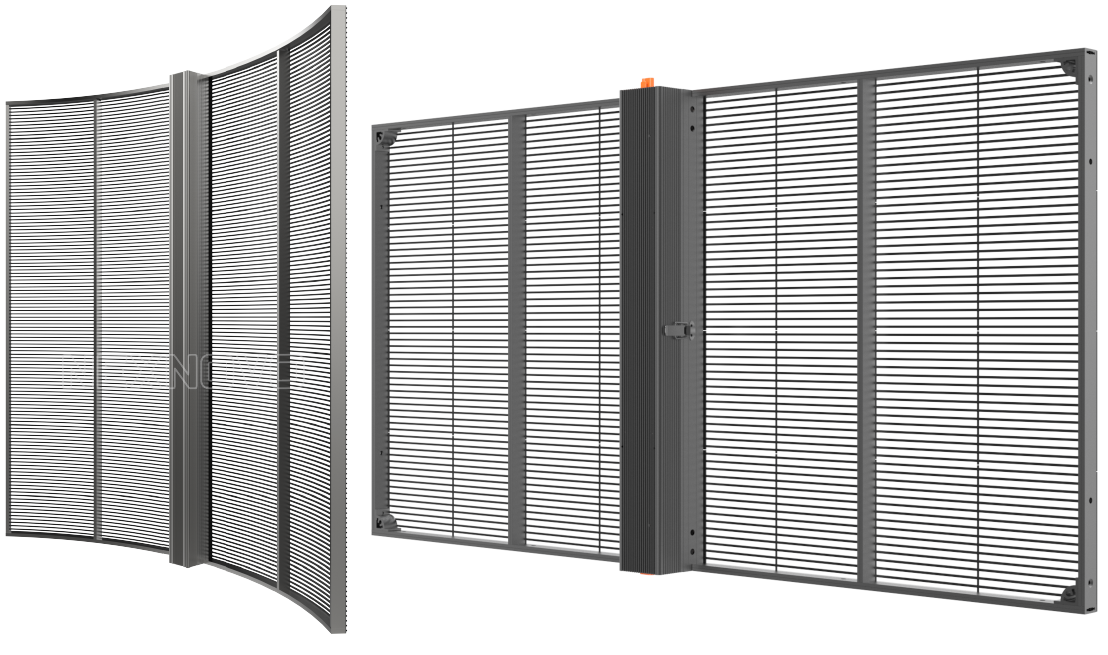
Fixing and structure of large indoor LED screens
Indoors, the structure for large LED screen always begins with the wall support analysis. Depending on dimensions, pitch, and module density, the weight of a fixed large screen can range from 80 to 400 kg: masonry anchors must therefore be sized on real data, after wall condition assessment.
In real installation, a poorly studied fix is the most frequent cause of issues on a large video wall, even when the LED panels themselves are of good quality. The difference lies in integration: a stable support limits mechanical stress, eases module alignment, and reduces corrective interventions after installation.
- Structural verification: preliminary study required for any screen above 4 m², incorporating the weight of LED modules, the metal framework, and cabling.
- Easy-Lock mechanisms: mechanical locking designed to stabilize each module and simplify maintenance access after installation is finalized.
- Certified team: at least two technicians to handle and position elements without stressing components during assembly.
- Factory controls: power supply verification before delivery to minimize defects detected only at commissioning.
An LED screen designed as an architectural element can also follow a concave or convex curve, take a specific tilt, or deploy as a ribbon. This configuration requires a tailored framework, with mounting points and assembly tolerances planned at the design stage: ideal when light is part of the design and must remain stable over time.
Outdoor large LED screen: safety standards
Conversely, outdoors, the safety standards for large LED screens cover mechanical resistance, electrical environment, and climate constraints. Once a large LED screen exceeds 4 m², a structural study by a certified engineering firm is generally required, especially for facade, roof, or pole mounting subject to wind loads defined by Eurocode.
- Wind resistance (Eurocode): structure sizing based on geographic zone, installation height, and applicable dynamic loads.
- CE and FCC: regulatory compliance and electromagnetic compatibility to limit interference with nearby equipment.
- ISO 9001 and ISO 14001: useful markers for manufacturing quality and environmental management, from the design of assemblies.
- OHSAS/OHSMS 18001: workplace safety framework relevant during installation and maintenance, especially at height.
The urban context often adds another layer of constraints. An LED storefront screen or LED advertising panel must respect local light advertising rules: shutdown hours, luminance levels, and operating conditions set by municipal decree. Rendering depends on this configuration, which integrates directly into the diffusion CMS.
Cabling and electrical power supply for large screens
A well-designed structure does not compensate for imprecise cabling. On large LED screens, a column-based wiring diagram with zigzag routing ensures proper data flow between modules: when a connection order is reversed, the display may show dead zones, flickering, or visible color shifts.
Series-powered supplies, associated with upstream tests on power blocks, secure commissioning. Once the installation is finalized, color calibration harmonizes light intensity and colors across the entire surface, whether an indoor screen or an outdoor device. This setting should be repeated periodically to account for the natural aging of LEDs.
Price and consumption of a large LED screen indoor or outdoor
The budget for a large screen is not just the hardware. Once the installation runs several hours per day, the electric expense weighs almost as much as the initial investment. To compare a large LED screen price seriously, you must consider purchase, usage, and settings that influence the bill over time.
Electrical consumption of large LED screens per m²
LED screen energy consumption varies first by placement and the brightness level required. Indoors, a LED indoor screen typically consumes 120 to 200 W/m². Conversely, an outdoor LED device exposed in semi-direct sun sits at 300 to 500 W/m², with peaks reaching 2,000 W/m² in full sun at maximum brightness. Rendering depends on the lighting environment as much as the display surface.
This baseline must be established at the design stage, especially for large-format display. The LED screen consumption is more accurately quantified when cross-referencing surface area, operating hours, site orientation, and the actual brightness level needed.
- 10 m² indoor screen: for 12 hours of operation, consumption reaches 24 to 48 kWh per day, with an estimated annual cost between €1,314 and €2,628 depending on the electricity rate applied.
- Common Cathode architecture: consumption can drop 20% to 40%, from 545 W/m² to 193 W/m² for a 10 m² screen, saving over €1,500 per year.
- Displayed content impact: a white background stresses every pixel at maximum, while dark tones or a black background reduce expense by 15% to 20% without hardware changes.
- LED vs LCD comparison: at equivalent brightness, a 55-inch LED screen consumes 80 W versus 120 W for LCD, saving 175 kWh per year with an ADEME A-/A+ rating.
LED technology achieves a luminous efficacy of 40 to 50 lm/W, versus 20 to 30 lm/W for LCD. At comparable perceived brightness, energy efficiency is nearly doubled. This differential becomes concrete on installations running more than eight hours per day, whether an advertising screen, a LED hall display, or a permanent event support.
Reducing the energy bill of a large LED screen
Once consumption levels are identified, several levers reduce operating load without degrading perceived quality. From the design phase, these settings have a direct impact on the annual expense: they affect the actual light output, the on-time, and how pixels are stressed.
- Eco mode: reduces consumption by 10% to 20% by automatically adjusting display parameters according to the programmed schedule.
- Ambient light sensors: up to 40% savings depending on sunlight, through real-time adjustment without manual intervention.
- Scheduled programming with night shutdown: several hundred euros saved per year, with a positive effect on component lifespan.
- Content design: dark backgrounds and balanced tones reduce consumption by 15% to 20%; disabling HDR mode may add a few more percentage points.
On a 10 m² installation, the cumulative effect of these methods represents €600 to €800 in annual savings. Once the installation is finalized, this gain accelerates the amortization of the most efficient technical options, often in less than two years. In real installation, this result assumes a programming consistent with the site’s usage and a brightness calibrated to the place, not to the screen’s theoretical maximum.
Lifespan and return on investment of large screens
The lifespan of large LED screens reaches 80,000 to 110,000 hours for indoor use, versus 15,000 to 30,000 hours for consumer TVs. This gap changes the 5‑year total cost: an indoor installation can thus avoid a complete replacement and several unplanned maintenance interventions. Ideal when light is part of the design and must remain stable over time.
For a large outdoor LED screen of 10 m² used 8 hours per day, LED efficiency enables approximately €9,000 in savings over the operational lifetime compared to a less performant solution. This gain remains tied to concrete parameters: the actual brightness level used, shutdown strategy, power supply type, and displayed content. What the eye retains is readability; what the budget measures is the number of hours displayed at the correct intensity.
Cross-referencing surface area, pitch, installation environment, and daily on-time remains the first step before making a choice. A LED screen quote then helps estimate acquisition, installation, and multi-year operating costs. Choosing a LED screen based solely on purchase price risks underestimating the real cost, especially for an advertising screen, an indoor large screen project, or an outdoor LED installation.
Frequently Asked Questions
What is the technical difference between an indoor and outdoor large LED screen?
The difference rests on three concrete points: brightness, protection, and longevity. Indoors, a large indoor LED screen typically operates between 800 and 1,500 nits, with finer work on colorimetry and visual comfort. Conversely, a large outdoor LED screen must reach 5,000 to 6,000 nits minimum to remain readable in full sun.
This readability requirement drives different design choices. An outdoor LED screen, or more broadly an outdoor LED solution, requires at least an IP65 rating, or IP66/IP67 when the site is exposed to rain, dust, or splashes. Once the installation is finalized, what the eye retains is image stability: not just its light output.
The third criterion concerns thermal resistance. An LED screen installed outdoors must absorb freeze-thaw cycles and intense heat without module deformation or color shift.
How to choose the right pitch for a large LED screen?
Pitch is chosen based on the minimum viewing distance. For under 1 meter, a P1.5 remains appropriate; between 2 and 4 meters, a P1.9 to P2.6 is recommended; beyond 4 meters, P2.6 to P4.8 becomes reasonable. Once the installation targets outdoor viewing beyond 10 meters, P6 to P10 pitches are to be preferred.
An overly fine pitch increases cost and consumption with no visible benefit at distance; an overly wide pitch makes text and details harder to read. The difference lies in integration: content type, available viewing distance, and viewing angle must be assessed together.
This rule is verified on-site: the pitch in millimeters roughly equals the minimum comfortable distance in meters, allowing quick project framing before the technical study, especially when the large screen must display text, video, and fine visuals in the same space.
What is the real operating cost of a large LED screen?
For a large screen of 10 m² installed indoors and used 12 hours per day, consumption is between 24 and 48 kWh per day. This represents an estimated annual cost between €1,314 and €2,628, depending on the electricity rate.
Several levers reduce this expense. A Common Cathode architecture can lower consumption by 20% to 40%, and adding eco mode, light sensors, scheduled programming, and content-appropriate design can generate €600 to €800 in savings per year on this surface. Ideal when light is part of the design: the image stays readable without running the installation at full power constantly.
Operation is not just the energy bill. The lifespan of an LED panel or large LED screens sits between 80,000 and 110,000 hours, versus 15,000 to 30,000 hours for consumer LCD screens, reducing replacements and maintenance. Over the total operational lifetime, these savings can represent approximately €9,000 for a 10 m² surface.