
This complete guide walks you through choosing your ideal LED panel by leveraging key criteria such as wattage, color temperature, dimensions, and intended use. Learn how to choose your LED panel by adjusting each technical parameter to your actual needs, whether for indoor, outdoor, or horticultural applications.
Essential Criteria for Choosing Your LED Panel
Selecting an LED panel comes down to four fundamental elements: adequate wattage, properly sized dimensions, strong energy efficiency, and sufficient environmental protection. Each of these factors directly impacts brightness, power consumption, and the overall durability of your installation. The following sections provide practical methods for sizing your space and controlling costs.
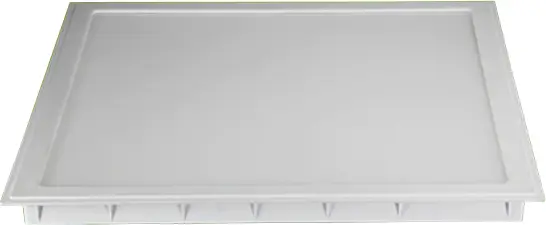
Wattage and Dimensions Scaled to Your Space
A 60x60 LED panel covers approximately 0.36 m² and remains the standard reference for most modular false ceilings. Common wattage ranges are: 18 W for small rooms, 40 W illuminating up to 10 m², and 60 W ideal for around 15 m² — factoring in ceiling height. As a starting point, budget about 10 W/m² for ambient relaxation lighting, 20 W/m² for office spaces, and 30 W/m² or more for very high-intensity illumination.
- Standard 60×60 cm format : integrates seamlessly into modular ceilings and simplifies calculating the number of panels needed.
- Wattage per area : 40 W for 10 m²; 60 W for 15 m²; adjust based on ceiling height and ambient brightness.
- Ceiling height : a high ceiling requires more wattage (opt for 48–60 W) or additional panels for uniform lighting.
The 60x60 panel remains indispensable for standard installations, while rectangular formats (120×30 cm or 120×60 cm) suit narrow or elongated spaces like corridors better. Allow roughly a 200 mm spacing between square panels to ensure uniform light diffusion and avoid shadowed areas.
Optimal Energy Efficiency and Luminous Flow
Rated wattage alone is not enough: prioritise a luminous efficacy exceeding 150 lm/W to reduce power consumption while maintaining high luminous output. To determine your lumen requirements, multiply the desired illuminance (in lux) by the area in m², then divide by the energy efficiency of the panel you choose.
A high-efficiency 24 W model delivers around 3,600 lumens — enough to illuminate 20 m² in offices at 180 lux. A constant-current driver stabilises power supply despite voltage fluctuations and ensures a lifespan exceeding 50,000 hours. Make sure you also have a high power factor and a UGR (Unified Glare Rating) below 19 to preserve visual comfort.
A standard 120° diffusion angle provides even light distribution, potentially reducing the number of units needed. Ultra-thin panels, less than 10 mm thick, are ideal for greenhouses since they don’t impede air circulation. Finally, the LED type matters: SMD for indoors, or high-brightness DIP for outdoor use, directly affects performance and consumption.
Standard Formats and Spacing for Installation
Square formats (30×30 cm, 60×60 cm, 600×600 mm) fit easily into most modular false ceilings. Rectangular formats (120×30 cm or 120×60 cm) provide better coverage for narrow or elongated spaces. Finally, pay attention to frame weight and material: aluminium offers both durability and easy installation, especially for suspended or surface-mounted setups.
Color Temperature: What Ambiance to Create
Color temperature defines the visual ambiance of a room and directly influences occupant comfort. It is therefore essential to choose between warm white (2700–3000 K), neutral white (4000–4500 K), or cool white (6000–6500 K) based on the materials present, the activities carried out, and the desired effect. For a harmonious result, maintain lighting consistency within the same zone and avoid harsh contrasts.
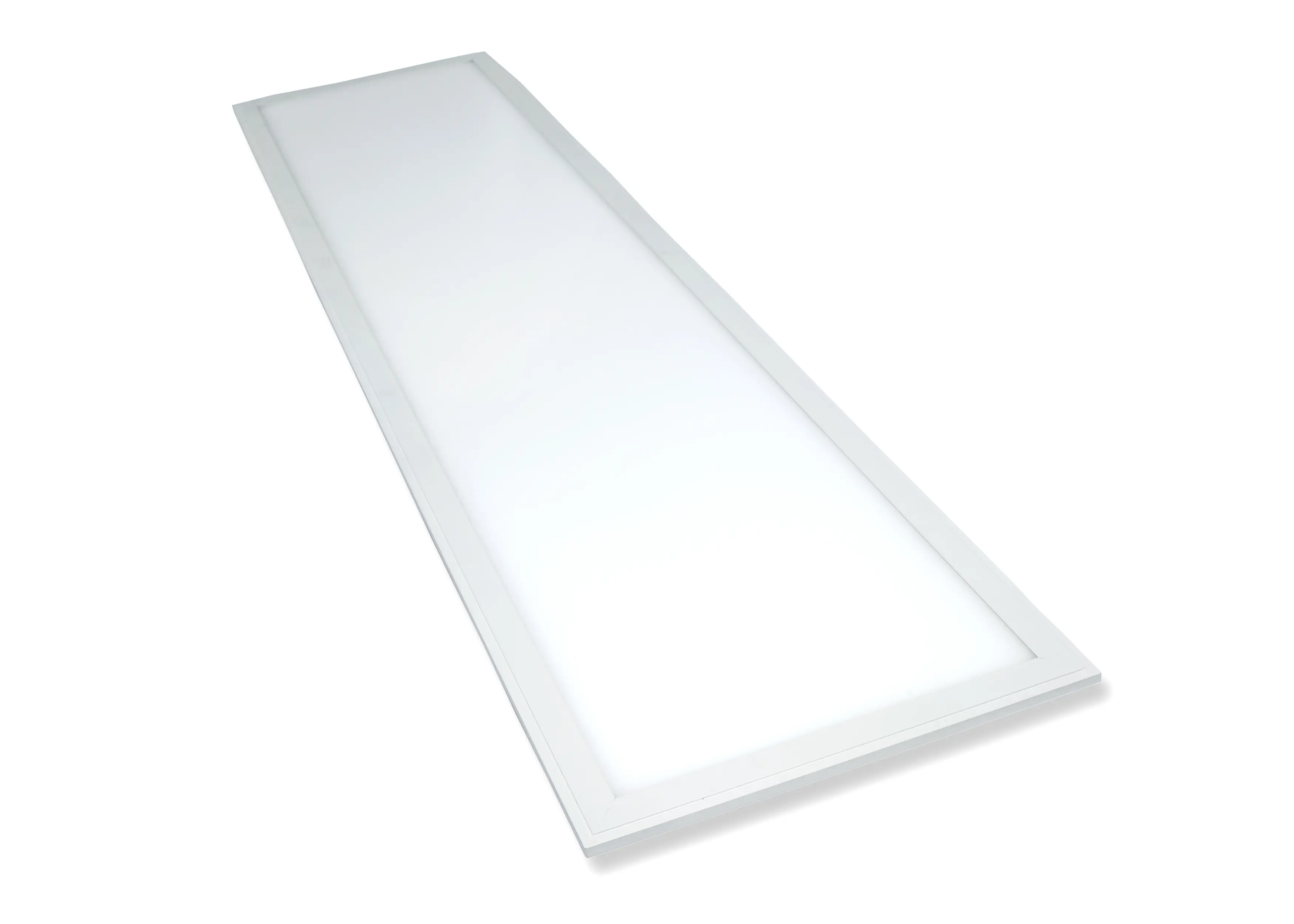
Warm, Neutral, or Cool White: Depending on Use
Warm white (2700–3000 K) emits a soft, slightly golden light, ideal for creating a cozy atmosphere in living rooms, dining areas, relaxation zones, or reception spaces. Neutral white (4000–4500 K) reproduces natural daylight clarity and reduces eye strain, making it perfect for kitchens, bathrooms, offices, and workspaces. Cool white (6000–6500 K) casts a blue-tinted light, appreciated in workshops, laboratories, shop windows, or any environment requiring high colour precision. The dominant material also plays a role: wood blends better with warm tones, while glass or metal look best with cool or neutral whites.
Some panels offer variable color temperature (RGBW or adjustable CCT), allowing colour adjustment via remote control or app. This flexibility boosts daytime concentration and aids evening relaxation. Avoid mixing drastically different color temperatures within the same zone to preserve a cohesive visual identity and ensure pleasant lighting.
| Kelvin Temperature | Light Type | Recommended Applications |
| 2700–3000 K | Warm yellow white | Living rooms, relaxation, reception, restaurants, bars |
| 4000–4500 K | Neutral white | Kitchens, offices, bathrooms, work zones |
| 5000–6500 K | Cool blue white | Workshops, laboratories, shop windows, horticulture |
Matching Color Temperature to Materials and Décor
Solid wood furniture or a wooden palette takes on a warm undertone under warm white, accentuating the natural golden light of the material. Conversely, steel, glass, and concrete gain a modern feel with neutral or cool white. Color temperature directly alters spatial perception: cool tones make a room feel larger, while warm tones create a more intimate atmosphere.
For outdoor applications, signage lit at 6000–6500 K contrasts effectively against the sky and guarantees excellent readability. Indoor grow operations focused on vegetative growth also benefit from 5000–6500 K, unlike domestic spaces where warmer ambiances are often preferred.
The panel finish — light white, deep black, or silver — also influences decorative integration: a white frame visually expands the space, while a warm tone makes a room feel cozier. Harmonising the frame with the color temperature reinforces the visual identity of boutiques, showrooms, or professional spaces through tailored lighting.
LED Panels for Outdoor and Display Use
Brightness and IP Rating for Weather Resistance
An outdoor LED panel must carry at least an IP65 rating to ensure waterproofing against water jets and dust — whether on a façade, in a parking lot, or any exposed area. For extremely humid or flood-prone environments, an IP68 standard is recommended. Additionally, an anti-UV coating preserves colour integrity despite prolonged sun exposure. With an energy efficiency of at least 150 lm/W, power consumption stays controlled while delivering the brightness essential for permanent outdoor display.
- IP65 rating : Ensures effective waterproofing against dust and water jets, essential for any outdoor installation such as façades or parking lots.
- Anti-UV coatings : Guarantee long-term colour stability by protecting against sunlight and weather variations.
A refresh rate of at least 3,000 Hz virtually eliminates flicker, improving visual comfort during extended outdoor observation. Certifications from manufacturers confirm compliance with local safety standards, providing extra reassurance for operators deploying panels in public-facing commercial spaces.
LED Panels for Cultivation and Horticultural Applications
An LED panel designed for cultivation stimulates plant growth by delivering a balanced spectrum of blue and red light — essential to the photosynthesis process. To evaluate performance, PPF (Photosynthetic Photon Flux) and PPFD (Photosynthetic Photon Flux Density) measurements quantify effective photons and help predict final yield. The ideal wattage to use is directly proportional to the area to cover; it is common to use about 35 W per 100 cm² (equivalent to 350 W/m²), though this value should be adjusted based on the specific light spectrum of your setup.
Full Spectrum and Photometric Measurements
A panel in Full Spectrum combines blue wavelengths, which promote vegetative growth, and red wavelengths, which encourage flowering, thus supporting the plant through its entire lifecycle. PPF (in µmol/s) indicates the total photon flux emitted, while PPFD (in µmol/m²·s) measures the actual intensity of light received by the plants. Achieving an energy yield between 2.5 and 3.0 µmol/J, the best LED panels for cultivation can minimise electricity consumption without sacrificing productivity.
- Blue spectrum : Encourages compact vegetative growth and denser foliage.
- Red spectrum : Triggers and accelerates flowering, plus increases fruiting rates.
- Full spectrum : Supports every stage, from germination through final maturation.
- High efficiency : A yield of 2.9 µmol/J allows optimal energy use dedicated to lighting.
For a grow area of 1.4 m × 1.4 m, a PPFD between 400 and 600 µmol/m²·s is generally sufficient, depending on the growth stage of the plants. Using dimmable controllers, DMX, or Bluetooth systems allows precise adjustment of intensity and spectrum. This way, you can adapt wattage and reduce power consumption throughout the growth cycle.
Recommended Wattage Based on Grow Area
On average, a 300 W panel effectively illuminates about 1 m², while 600 W becomes necessary for a 1.3 m² area — this ratio should be refined according to the actual light spectrum. Rectangular LED panels are ideal for elongated spaces, whereas square LED panels install more easily in small greenhouses. Preferring several moderate-power modules over a single high-power unit ensures more uniform lighting and avoids excessive heat build-up zones.
- 300 W for 1 m² : A compact configuration ideal for grow cabinets or vertical farms.
- 600 W for 1.3 m² : A standard choice for commercial productions requiring high yields.
- 35 W/100 cm² benchmark : A practical calculation baseline adjustable based on desired spectrum and intensity.
Choosing ultra-thin panels, often less than 10 mm thick, avoids restricting air circulation — a critical factor for plant health. The specific format of the Prisma 60x60 LED panel, or other rectangular modules, greatly simplifies installation even in unconventional layouts. These cultivation-specific devices deliver a light spectrum of great precision, ensuring robust growth and generous flowering across the entire lit surface.
Frequently Asked Questions
What LED panel wattage should I choose for the area I need to light?
To determine the necessary wattage, budget roughly 10 W/m² for ambient lighting, 20 W/m² for task lighting, and over 30 W/m² for accent lighting. In a 10 m² office, a 40 W panel is usually sufficient, while a 60 W panel becomes relevant from 15 m² onwards. Ceiling height is also a determining factor: the higher it is, the more wattage you need. Available LED panel ranges offer various wattages, such as 18 W, 24–30 W, 40 W, or 60 W. A 35 W 60x60 LED panel, for example, is a good compromise for effectively illuminating an area of 8 to 10 m².
What Kelvin color temperature should I choose for a luxury boutique or showroom?
In a high-end boutique or showroom, opt for neutral white between 4000 and 4500 Kelvin. This color temperature will highlight materials and preserve the authentic colour of products. To create an intimate atmosphere, choose warm white (around 2700–3000 K) instead. Conversely, a cooler white (6000–6500 K) is ideal for emphasising high-tech surfaces or areas requiring precise colour accuracy. It is recommended to use the same color temperature in each zone to avoid unattractive contrasts and reinforce the venue’s visual identity. For added flexibility, especially during events, panels with adjustable color temperature can also be considered.
What type of LED panel should I choose for indoor hydroponic cultivation?
For hydroponic cultivation, choose a specialized panel featuring a so-called “Full Spectrum” panel. This type of panel combines blue light — essential for the growth phase — and red light, which promotes flowering. Prioritise SMD LED type with an efficiency of at least 2.5 µmol/J and a PPFD between 400 and 600 µmol/m²·s over the grow area. You typically need around 300–350 W per m² (600 W for 1.4 m²) for optimal results. Ultra-thin horticultural models improve air circulation around plants. To ensure better yields, investing in a true grow LED panel is strongly recommended over standard domestic lighting. You can find more information in this comparison of LED and OLED technologies.