
The emergence of transparent screens represents a genuine shift in visual communication and retail. These innovative tools combine technology, aesthetics and functionality to meet the demands of modern retail — from boutique flagships in Dubai Mall to luxury showrooms across the Emirates. Here is why they have become a strategic choice for points of sale.
I. Showcase your products while capturing attention
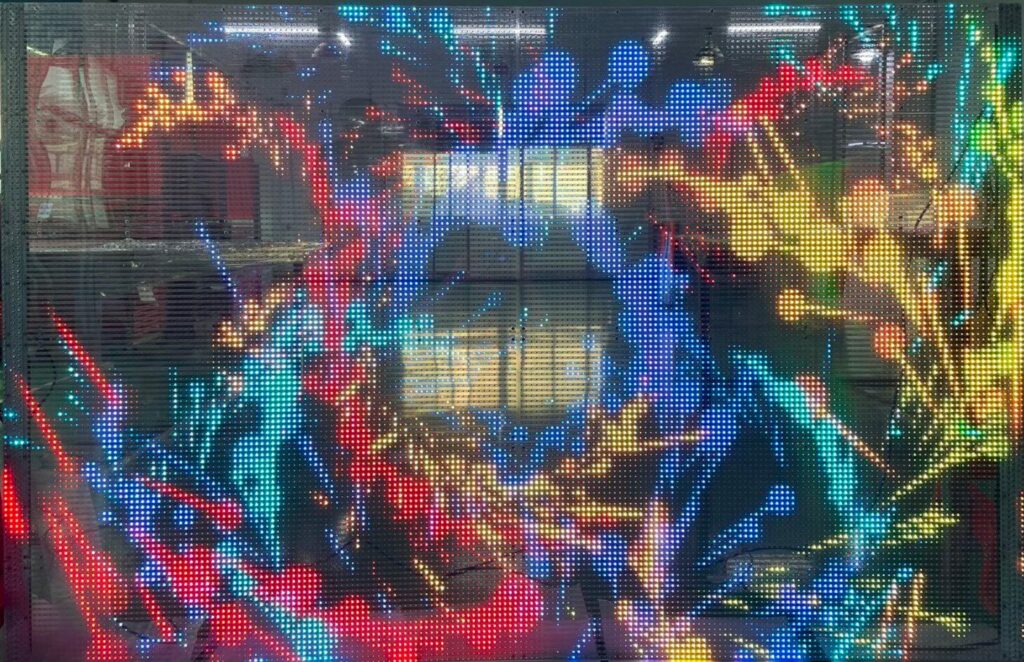
A transparent screen lets you display dynamic content while keeping your point of sale and your products visible in the background. Unlike a conventional screen, which masks the space behind it, transparent screens offer a unique combination:
- Display animations, videos or promotions without hiding the retail space.
- Create a captivating visual effect that draws passers-by towards the store.
- Preserve all the natural light entering the space for those inside.
- Allow staff and customers inside the store to enjoy an outward view without feeling confined.
This dual impact — physical product + digital content — guarantees an optimal showcase for your offering.
II. Screen pitch: transparency and resolution
The pitch, which defines the spacing between pixels, has a direct influence on two essential aspects of the screen: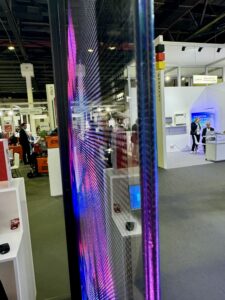
- Transparency: the wider the pitch, the more transparent the screen, allowing better visibility of the products behind it.
- Resolution: a tighter pitch improves display definition, delivering a sharper image but reducing transparency.
It is therefore crucial to understand how these two factors interact, in order to choose the optimal pitch for your requirements.
When to choose a wide or tight pitch?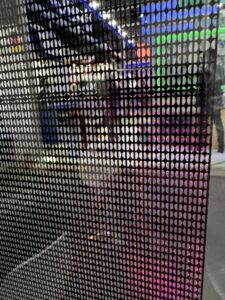
The choice of pitch depends mainly on two factors: the distance between the screen and the viewer, and the type of content you wish to display.
Distance between the screen and the viewer:
- Wide pitch: a wide pitch is preferable when the screen is placed at some distance from viewers — for example in shop windows or in spaces where customers stand back from the display. This maximises transparency.
- Tight pitch: if the screen is placed close to viewers, such as on a display stand, a tight pitch is needed to ensure optimal resolution while preserving good transparency.
Type of content to display:
The content also plays a decisive role in pitch selection:- Light effects or static text: to display light effects or simple text, a wide pitch may suffice. The goal is to prioritise transparency while ensuring rendering clear enough to read text or display simple light effects.
- Animations or complex imagery: if the screen needs to display animations or detailed visuals, a tighter pitch is preferable. This maintains high resolution and ensures the legibility of dynamic content while preserving a degree of transparency.
The importance of the background to optimise transparency
It is also essential to consider the background of the screen. A black or dark-coloured background is strongly recommended to make the most of transparency. Black accentuates the brightness of the displayed elements while keeping the products behind the screen visible.
Conversely, a light-coloured background can reduce the transparency effect, as its luminosity creates glare and diminishes both clarity and the visibility of objects behind the screen.
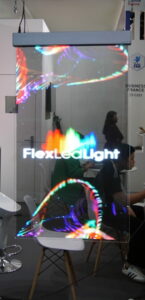
Adaptability to your space and your requirements
Depending on the available space and the desired effect, you can choose a pitch tailored to maximise the impact of your transparent screens:
- For large surfaces: a wide pitch to optimise transparency without compromising visual impact.
- For smaller surfaces or detailed content: a tighter pitch to guarantee a more precise definition.
Optimise your experience with the right transparent screens
Understanding the interaction between pitch, viewing distance and type of content allows you to maximise the impact of your transparent screens at the point of sale. By choosing these parameters wisely, you create a unique visual experience that captures customer attention while showcasing your products.
Embrace the innovation and flexibility of this technology to transform your shop windows and deliver visual communication that is both modern and effective.